

Estimated reading time: 29 minutes
After two extended winter stays—and with a third planned for 2027—we have learned what the Algarve feels like beyond the summer season, where to stay and what long-stay travellers should expect.
What Winter in the Algarve Has Come to Mean to Us
Why We Chose the Algarve
We first chose the Algarve in winter because we love being near the ocean—the salt in the air, the changing Atlantic light and the steady rhythm of waves folding onto the shore.
During our first stay, a walk along the beach before breakfast quickly became part of my daily routine. By our second winter, it no longer felt like something I was doing on vacation. It was simply how the day began.
That difference captures much of what an extended winter stay in the Algarve feels like.
You still visit castles, old towns, markets and coastal viewpoints. But over several weeks, the highlights begin to share space with more ordinary moments: buying groceries, returning to a favourite restaurant, watching the weather move across the Atlantic and deciding where to walk that morning.

From Winter Destination to Seasonal Home
We have now spent two winter seasons based in Albufeira, using it to explore from Tavira and Olhão in the east to Lagos and Sagres in the west, as well as inland communities such as Loulé and Silves.
We are planning to return for a third season in 2027.
The Algarve has not felt exactly the same during those two stays. Both began with unsettled weather, yet our second winter shifted into weeks of glorious sunshine from the third week through the end of April.
Winter does not transform the Algarve into a tropical escape. It reveals a different version of the region: quieter, more spacious and less performative, but still shaped by changing weather, seasonal closures and the practical realities of living somewhere for several weeks.
For snowbirds and other long-stay travellers, the Algarve offers a different proposition from a short winter escape.
This guide explores what winter in the Algarve actually feels like, how the eastern, central and western parts of the region differ, where you might choose to stay and whether this style of long-stay travel would suit you.

The Algarve in Winter at a Glance
Overall feel: Slower and more spacious than summer, with a stronger sense of everyday Portuguese life outside the major resort areas.
Winter weather: Mild but variable. Expect comfortable walking days alongside cool mornings, rain, wind and occasional Atlantic storms.
Beaches: Better suited to walking, photography and watching the ocean than swimming or sunbathing.
Crowds and openings: Crowds are generally light, but some seasonal businesses close or reduce their hours.
Best suited to: Long-stay travellers, snowbirds, walkers and culturally curious visitors who value atmosphere and routine more than guaranteed beach weather.
Getting around: A car is useful for exploring widely, although a carefully chosen town and neighbourhood can support a car-light stay.
Walking and accessibility: Conditions range from level marinas and waterfronts to steep hills, calçada, stairs and exposed cliff paths.
Our experience: Albufeira remains the most practical base for the way we travel, but it will not be the best choice for everyone.
Is the Algarve in Winter Right for Snowbirds and Long-Stay Travellers?
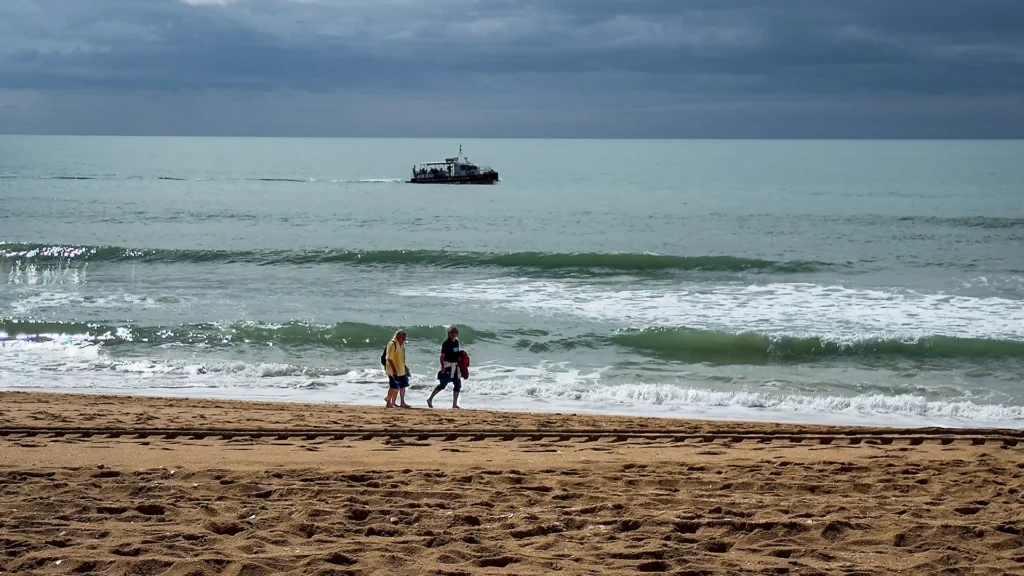
The Algarve works particularly well for travellers seeking more than a short escape from the cold.
It is not tropical, and it does not offer guaranteed sunshine every day. What it does offer is the possibility of building a comfortable rhythm around mild weather, coastal walks, familiar restaurants, local markets and regular day trips.
A one-week visitor may judge the Algarve by the forecast or by how many attractions they manage to see. During a longer stay, the experience becomes less dependent on individual days. Rain can interrupt a plan without ruining the trip.
You May Feel at Home Here if You Enjoy:
- Walking outdoors whenever the weather allows
- Returning to familiar cafés, restaurants and neighbourhood routes
- Exploring towns gradually rather than rushing through them
- Mild temperatures rather than intense heat
- A quieter pace outside the main tourist season
- Using one base to explore a wider region
- Days that feel satisfying without being heavily scheduled
You May Find It Less Satisfying if You Expect:
- Consistently warm beach weather
- A lively resort atmosphere every night
- Every restaurant and attraction to operate on summer schedules
- A completely car-free way to explore the entire region
- Uniformly flat and accessible streets
- Canadian-style central heating and insulation
- Every day to feel like a traditional vacation
A marina resort, a working fishing town and an inland market town can offer very different winter experiences, even when they are less than an hour apart.
Choosing the right base therefore matters more than simply choosing “the Algarve.”
Our Snowbird Destination Checklist can help you compare climate, healthcare, accessibility, food, connectivity and everyday livability before committing to a longer stay.
What Is the Weather Like in the Algarve in Winter?

Descriptions of the Algarve as a winter-sun destination are accurate, but they can create the impression that every day will be warm, dry and suitable for a restaurant terrace.
That has not been our experience.
When Atlantic Weather Arrives
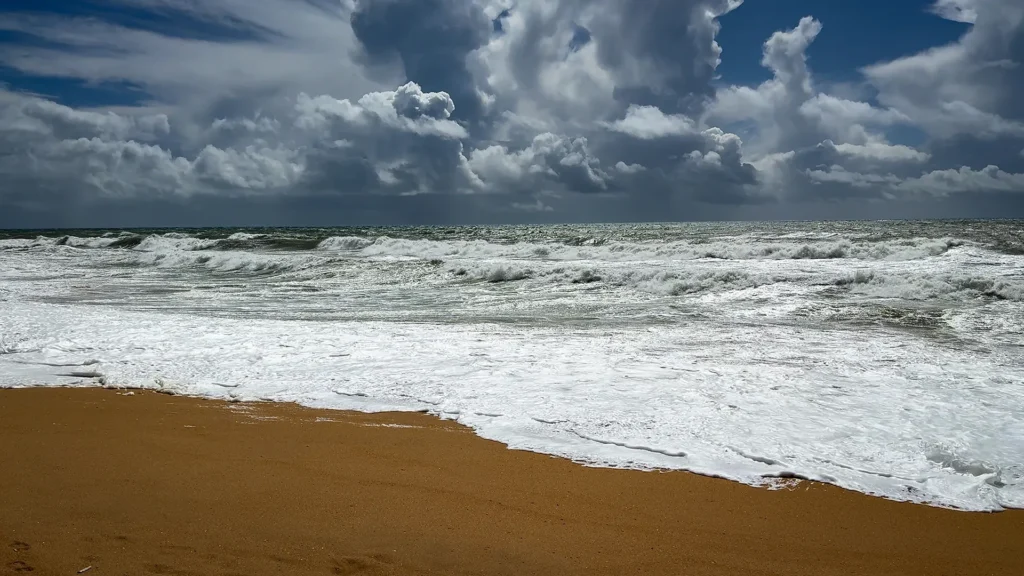
During our first winter stay, four substantial Atlantic depressions crossed Portugal in March. They brought periods of driving rain and powerful winds rather than the occasional passing shower.
At their height, there were reports of trucks being toppled on the highway leading north toward Lisbon. Markets closed, fishing boats remained in port and exposed coastal areas became uncomfortable—or occasionally unsafe—for walking.
Our second winter also began with unsettled weather. The first two weeks were rainy, while the same broader weather pattern caused substantial flooding farther north in Portugal.
When the Season Changes
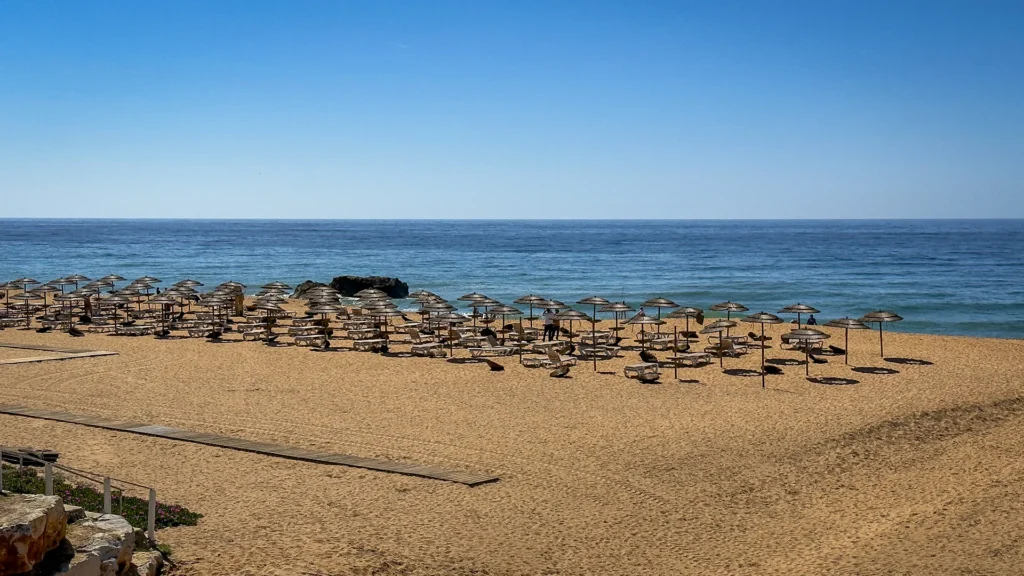
Then, almost as though someone had changed the season, the skies cleared.
From the third week of our second stay until we left at the end of April, we enjoyed solid sunshine. Mornings were bright, daytime temperatures were comfortable and the coast felt completely transformed.
It was glorious.
The contrast taught us not to judge an Algarve winter by a few days—or even by the first two weeks. Persistent storms may be followed by weeks of clear skies and beautiful walking weather.
Prepare for Both Versions of the Algarve
Bring waterproof footwear and a proper rain jacket, but also sunglasses, lighter layers and sun protection.
Just as importantly, choose accommodation where you will remain comfortable during several consecutive wet and windy days. The Algarve may be mild by Canadian standards, but winter comfort depends on more than the outdoor temperature.
Before setting out during unsettled weather, check the current Faro district forecasts and warnings from the Portuguese Institute for Sea and Atmosphere—IPMA.

Western, Central or Eastern Algarve in Winter?
The Algarve changes noticeably as you travel from west to east. The differences affect not only the scenery, but also weather exposure, walking conditions, services and everyday atmosphere.
Western Algarve: Dramatic and Exposed
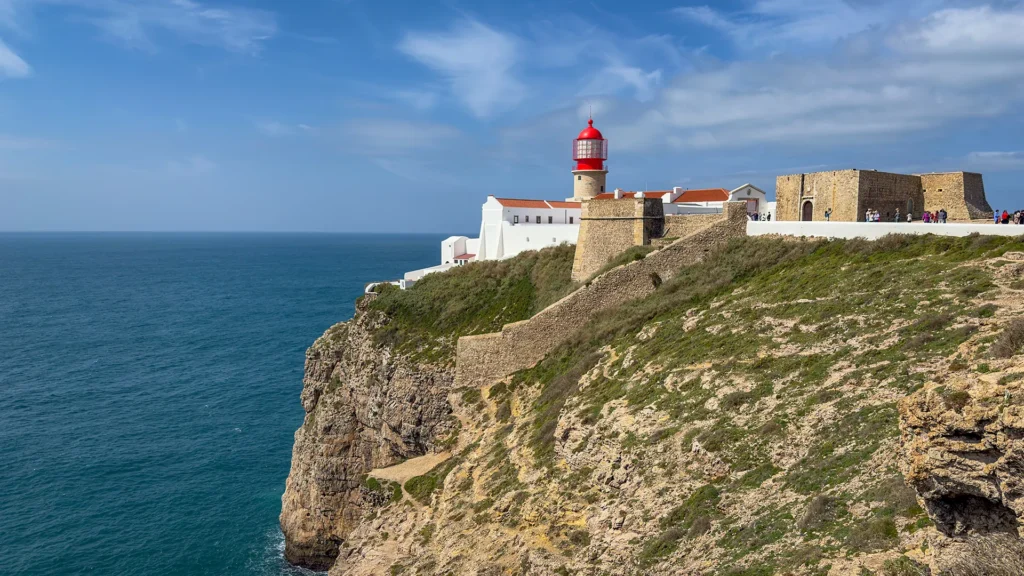
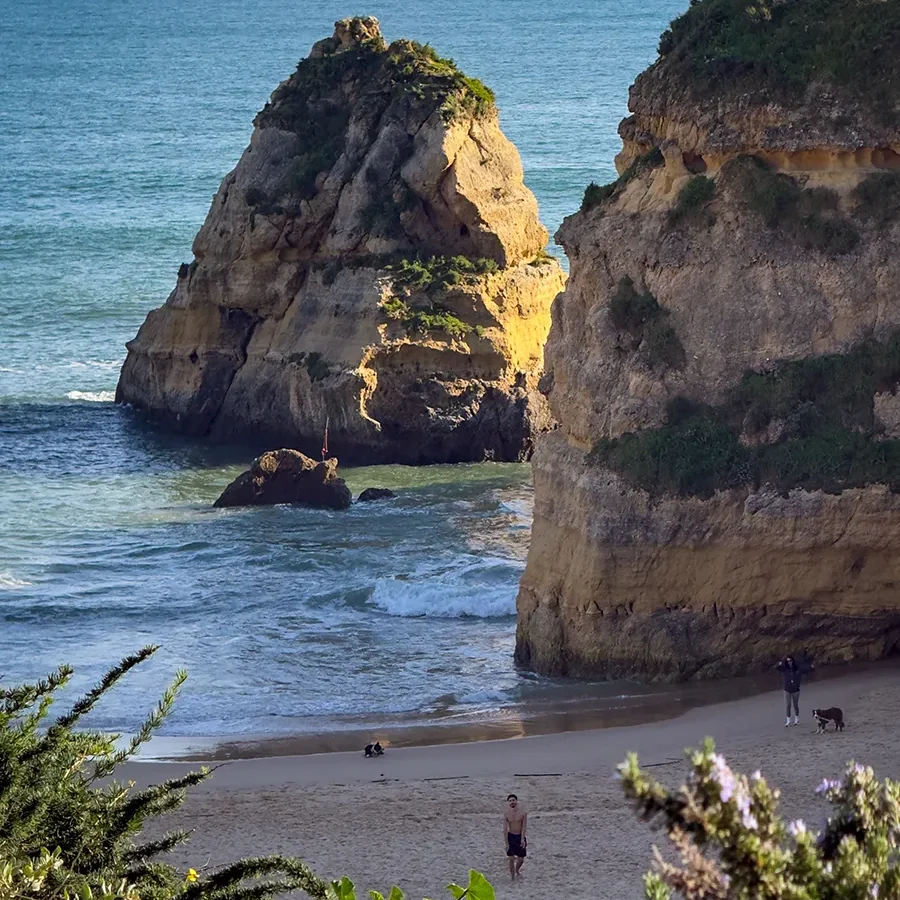
The western Algarve is defined by cliffs, coves, rock formations and long Atlantic views.
From Lagos toward Sagres and Cabo de São Vicente, the landscape becomes increasingly open, rugged and exposed. It suits travellers drawn to dramatic scenery, photography, surfing and coastal walking.
The trade-offs are stronger winds, more demanding terrain and greater distance from the eastern Algarve.
Central Algarve: Connected and Practical
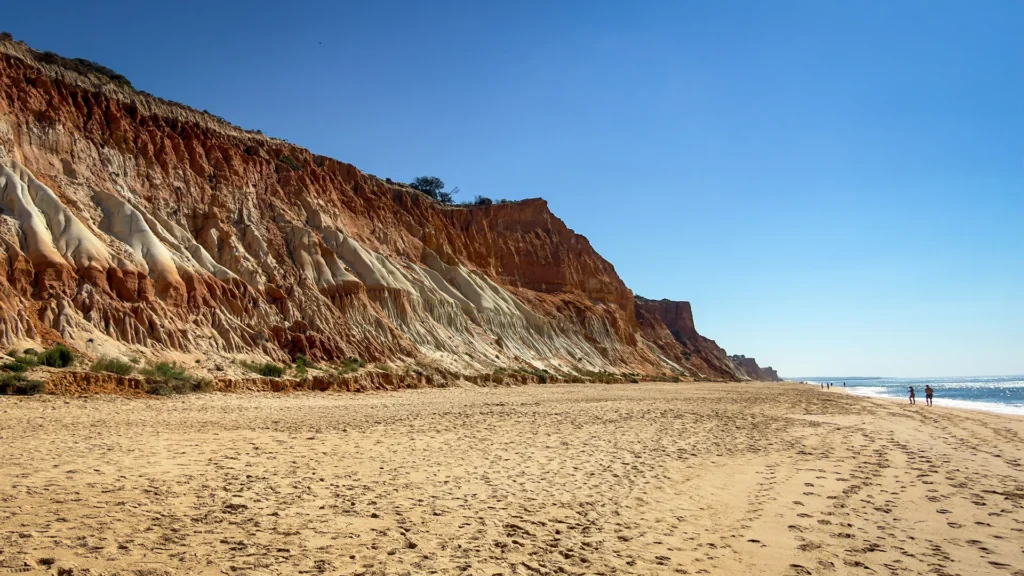
The central Algarve combines resort communities, residential neighbourhoods, commercial services and relatively easy access to inland towns.
It offers one of the widest selections of rentals, supermarkets, restaurants and year-round services. Its central position also makes regional day trips easier.
Some areas, however, are heavily shaped by tourism. Choosing the exact neighbourhood can matter as much as choosing the town.
Eastern Algarve: Quieter and More Locally Rooted
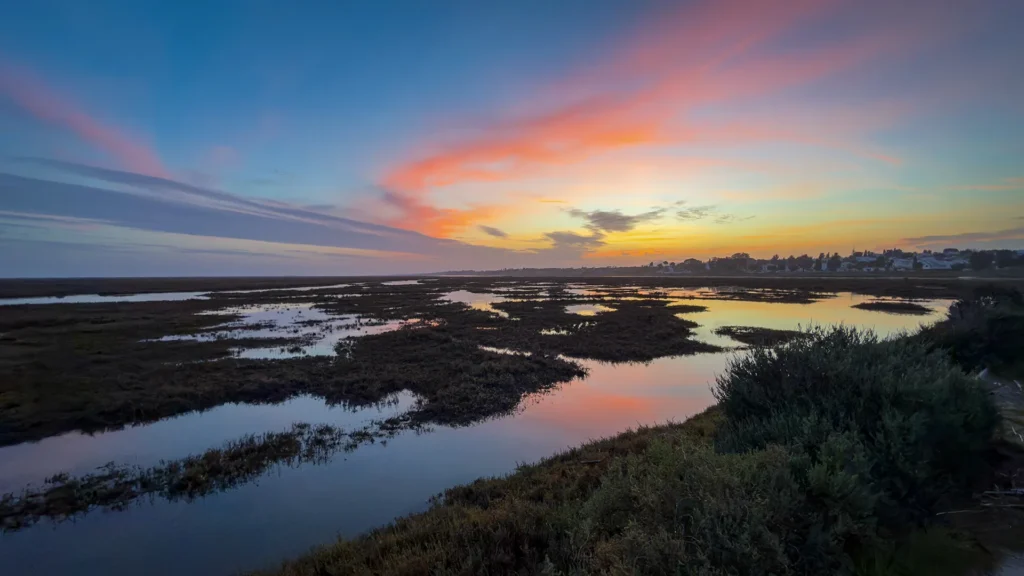
East of Faro, cliffs give way to lagoons, salt marshes, barrier islands and long stretches of sand shaped by the Ria Formosa.
The terrain is generally lower and flatter, and towns often feel more closely tied to fishing, markets and everyday Portuguese life.
The appeal is quieter than the dramatic western coast. It emerges through the changing light over the lagoons, waterfront markets and the slower rhythm of towns such as Faro, Olhão and Tavira.
There is no single best part of the Algarve in winter. The west offers drama. The centre provides convenience. The east feels quieter and more locally rooted. Your choice depends on what you want your days to feel like.
Where Should You Stay in the Algarve in Winter?

Choosing a winter base is less about finding the “best” town than finding the place that matches how you want to live.
A destination that works beautifully for a week may not be the best place to settle for six or eight weeks.
| Destination | What it feels like in winter | Best for | Possible drawback | Base or day trip? |
|---|---|---|---|---|
| Albufeira | Varied, practical and quieter than summer | First-time long stays, restaurants, beaches and exploration | Hills and heavily touristed areas | Strong base |
| Faro | Urban, local and lived-in | Car-light stays, culture and year-round services | Less of a beach-resort feel | Strong base |
| Tavira | Graceful, quiet and composed | Walkability, charm and a slower pace | Less central for the western Algarve | Strong base |
| Olhão | Working, weathered and maritime | Markets, seafood and island access | Less polished and weather-exposed | Possible base |
| Vilamoura | Polished, orderly and leisure-oriented | Marina living, golf and predictable infrastructure | Less historic texture | Strong base |
| Portimão | Urban, functional and spacious | Services, shopping and Praia da Rocha | Less intimate | Possible base |
| Lagos | Dramatic, historic and scenic | Coastal beauty and western exploration | Farther west and more exposed | Strong western base |
| Silves | Historic, elevated and atmospheric | History and inland scenery | Hills and fewer conveniences | Day trip |
| Loulé | Textured, local and commercially active | Markets and Portuguese everyday life | No coastal lifestyle | Day trip |
| Sagres | Remote, rugged and windswept | Surfing, scenery and solitude | Limited services | Short stay or day trip |
Albufeira
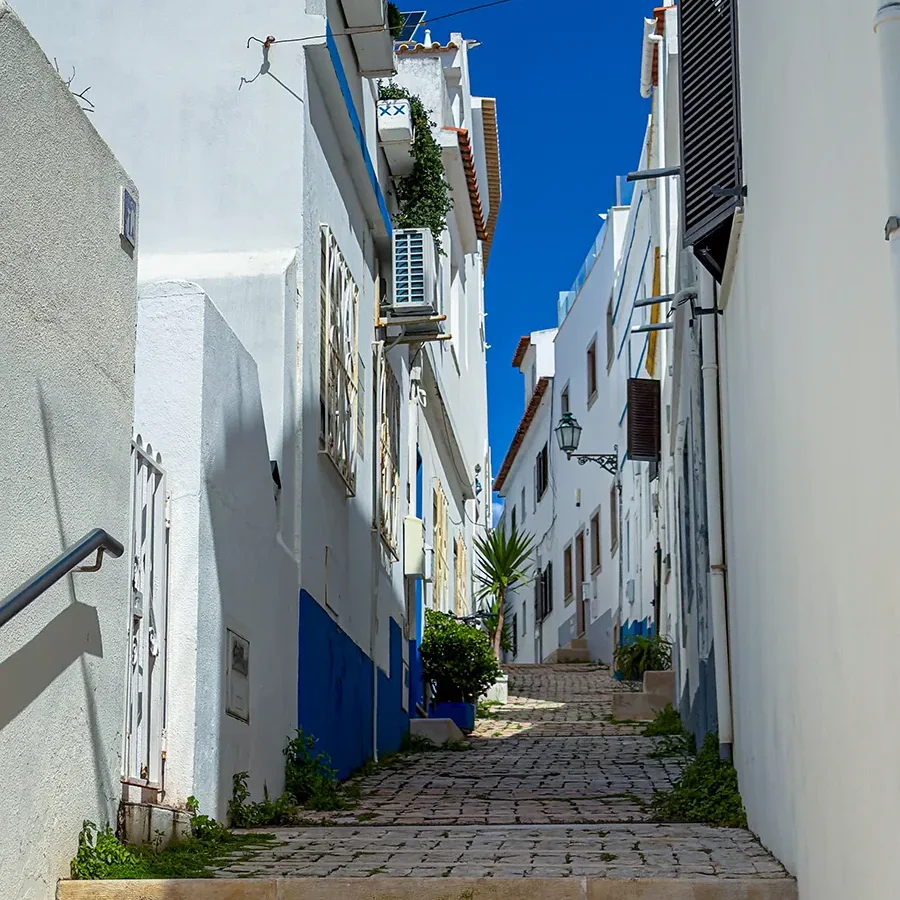
Albufeira offers beaches, rentals, restaurants, supermarkets and regional access in one practical base.
Its neighbourhoods differ considerably, and the hills can make short distances more demanding than they appear. But for travellers who want enough winter activity and convenient access to the wider Algarve, it remains one of the strongest choices.
Faro
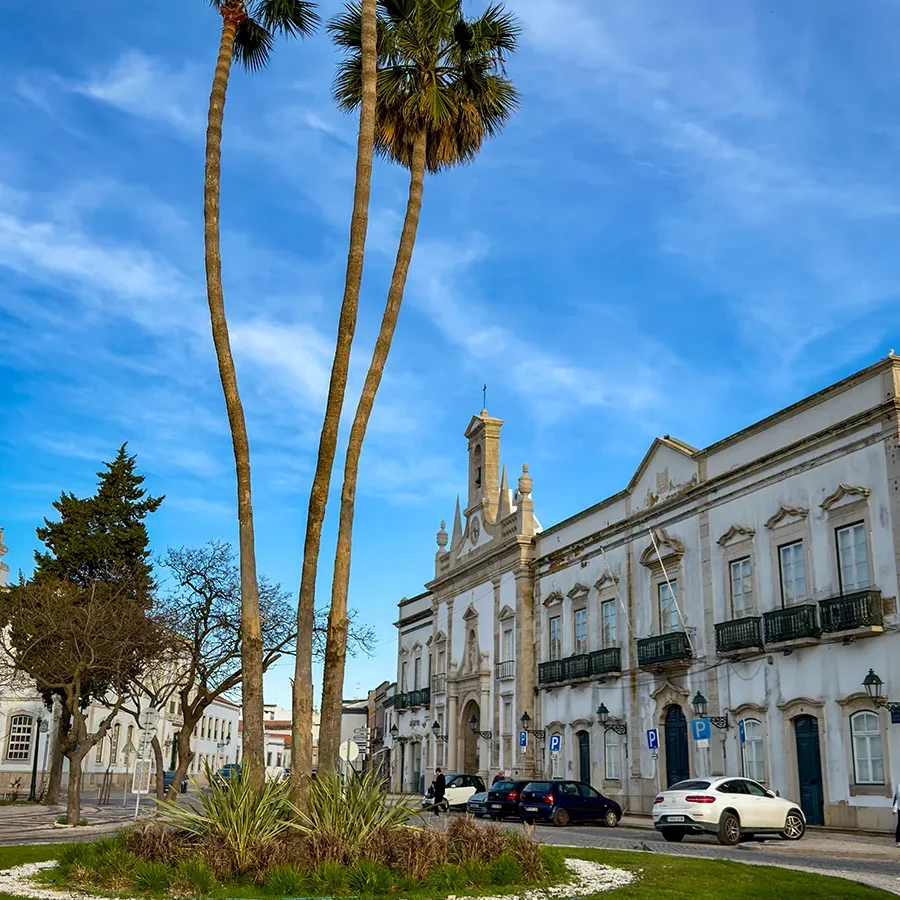
Faro feels more like a small regional capital than a resort. Its historic centre, university, waterfront, shopping streets and year-round services give it a steady winter rhythm. It may suit travellers who want to live more locally and rely less heavily on a car.
Our guide to Faro in winter explores its historic centre, lagoon light, restaurants and walkability in greater depth.
Tavira
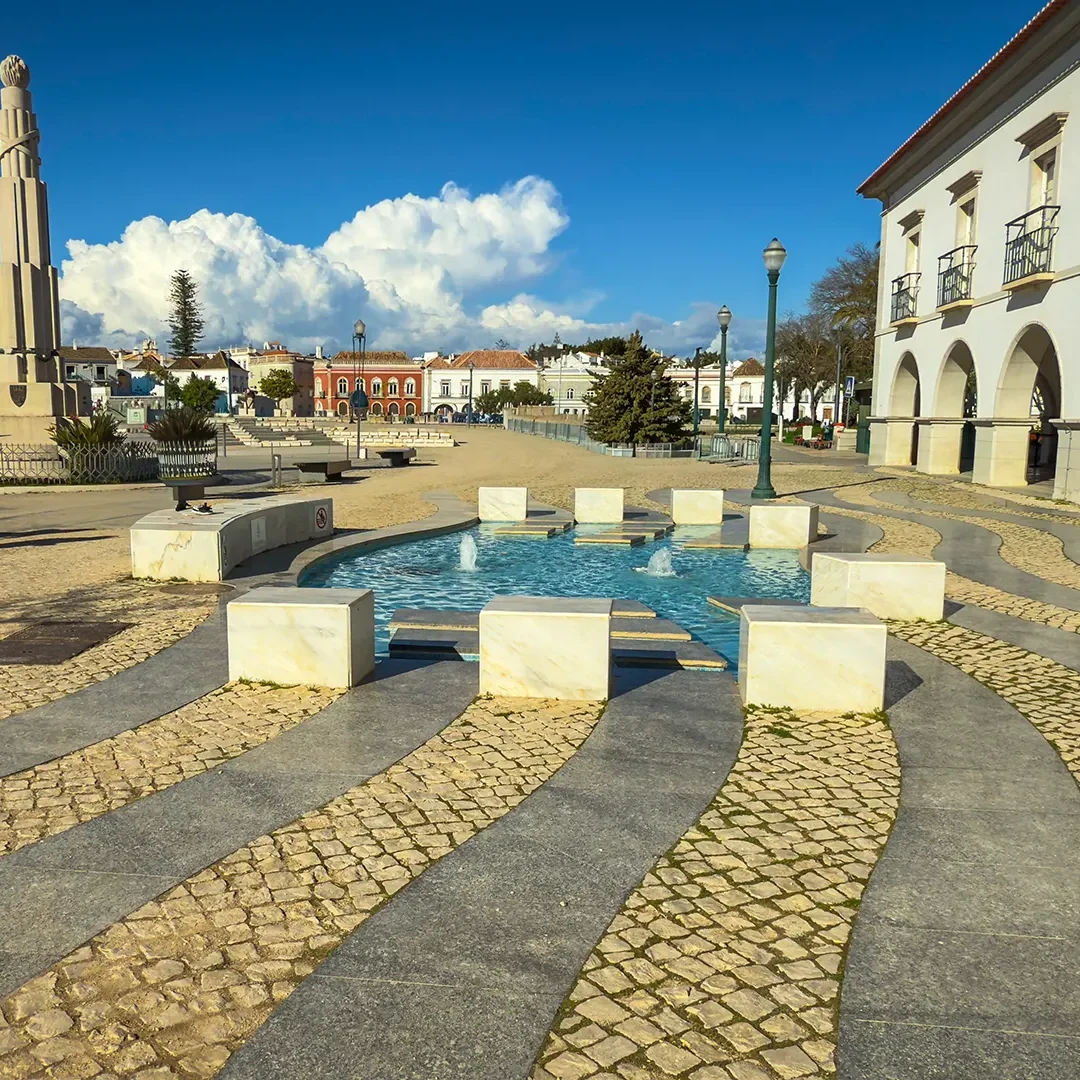
Tavira feels graceful and composed, with a compact riverside centre and a gentler pace than the larger resorts. It is one of the most immediately liveable towns we visited, particularly for travellers who value walkability, historic character and quiet.
Read our full account of Tavira in winter for more on its atmosphere and accessibility.
Olhão
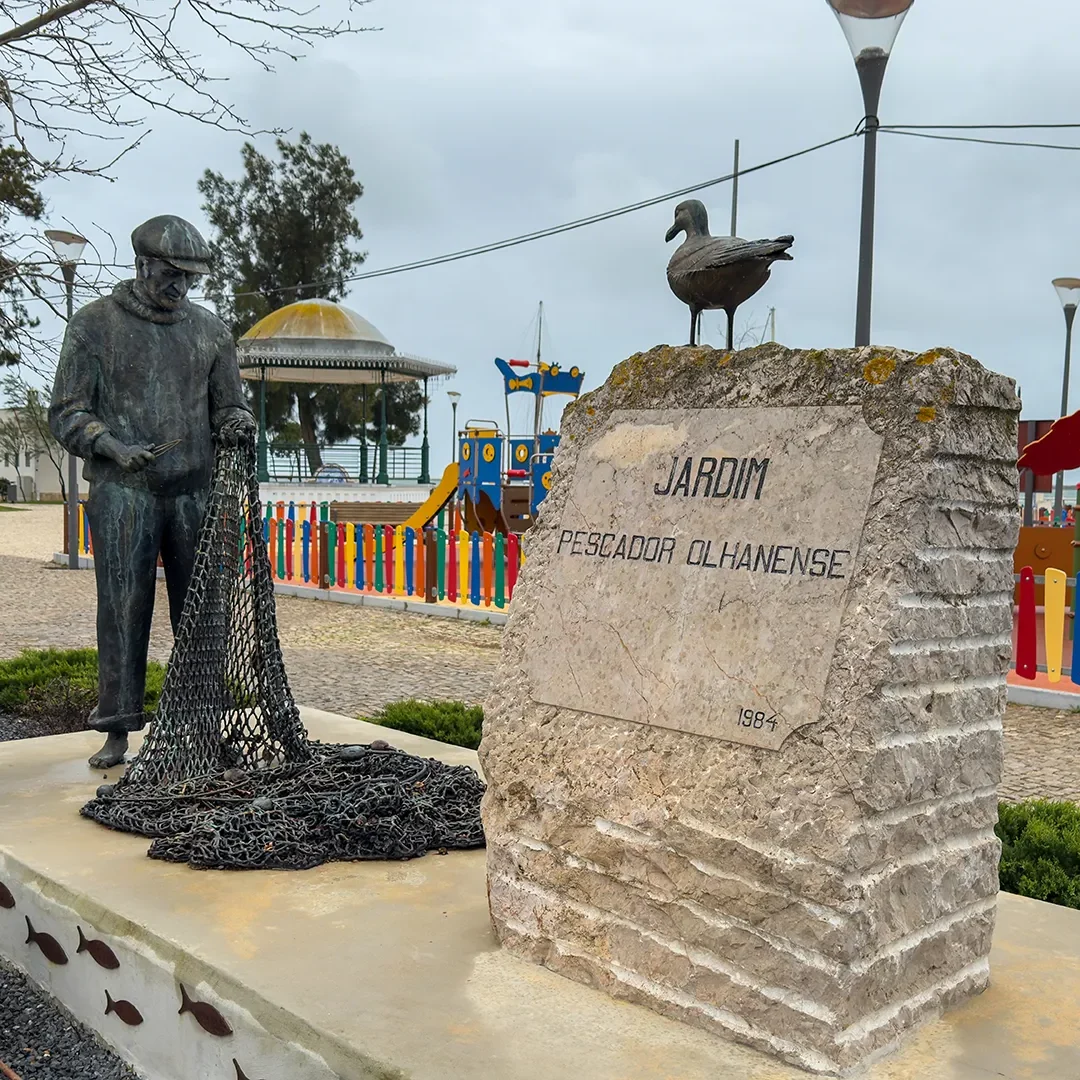
Olhão feels weathered, functional and closely tied to the sea.
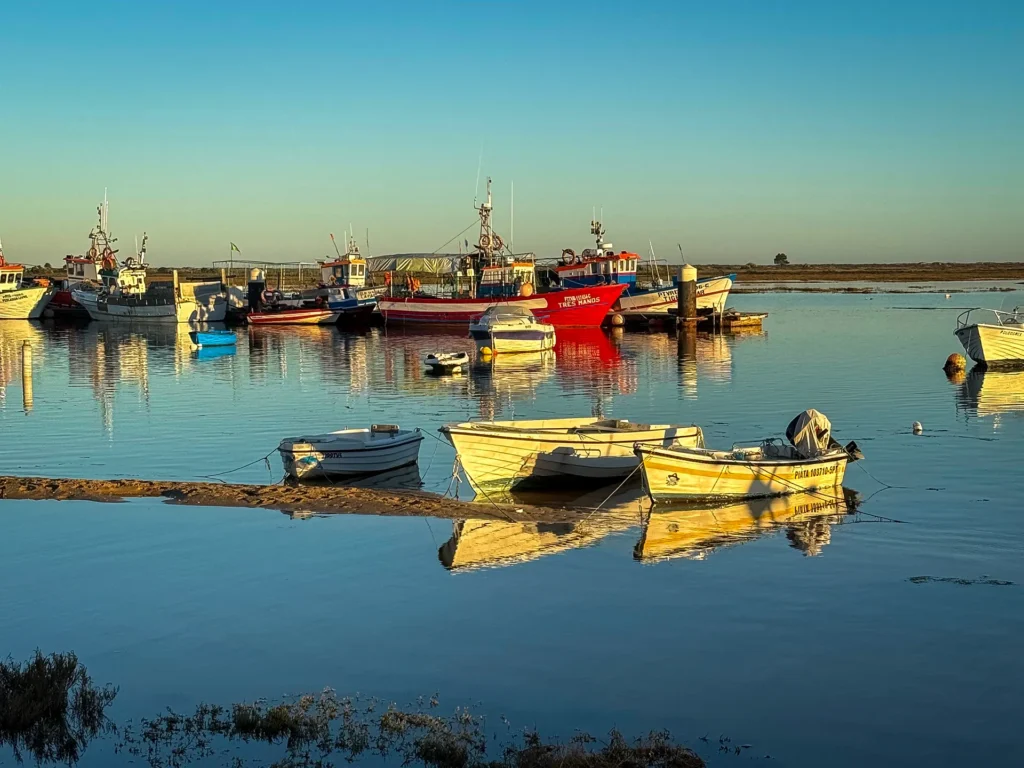
The market halls, fishing boats and ferry connections give the town a strong working character. It may appeal to travellers who prefer local texture and maritime life to polished resort surroundings.

Vilamoura
Vilamoura offers an orderly, leisure-oriented environment centred on its marina, golf courses and restaurants.
Its predictability and relatively easy waterfront walking will appeal to some travellers, while others may miss the historic texture and everyday Portuguese character found elsewhere.
Portimão
Portimão is more urban than picturesque.
It offers shopping, healthcare, supermarkets and practical services, while nearby Praia da Rocha adds a major beach environment. It suits travellers who value function and convenience over small-town intimacy.
Lagos
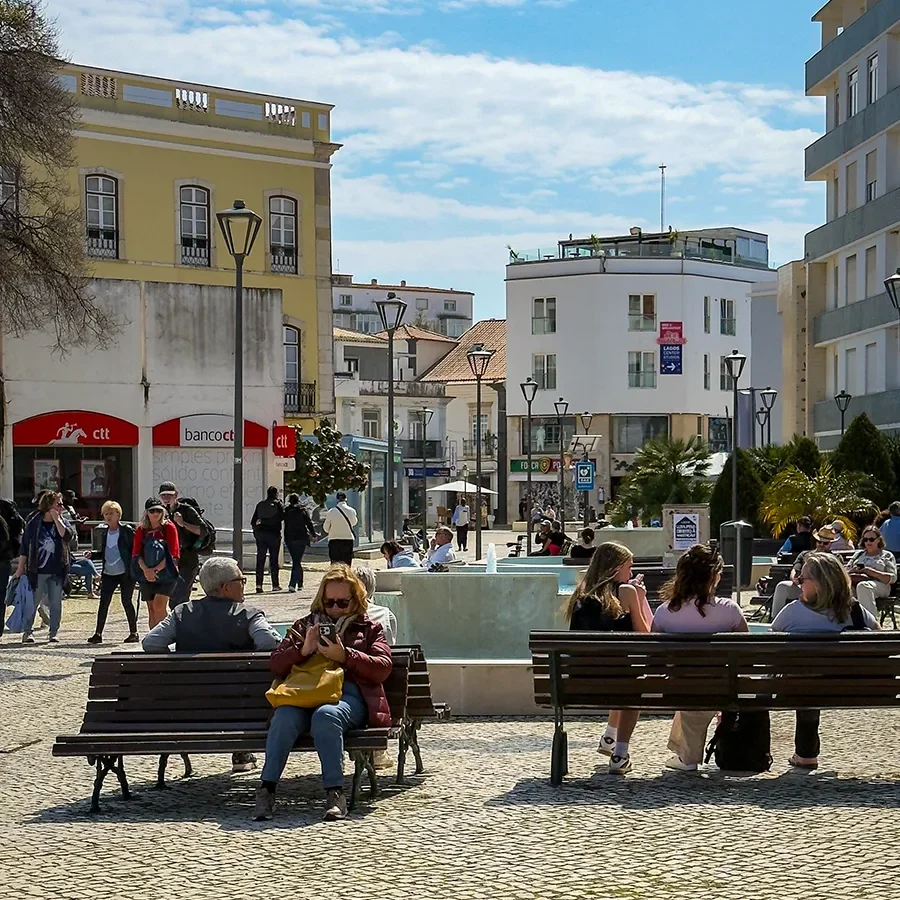
Lagos combines a lively historic centre with some of the Algarve’s most dramatic coastal scenery.
It is a strong western base for travellers focused on cliffs, walking and Atlantic landscapes. For our wider regional exploration, it has worked better as a memorable destination than as our home base.
Inland and Western Day Trips
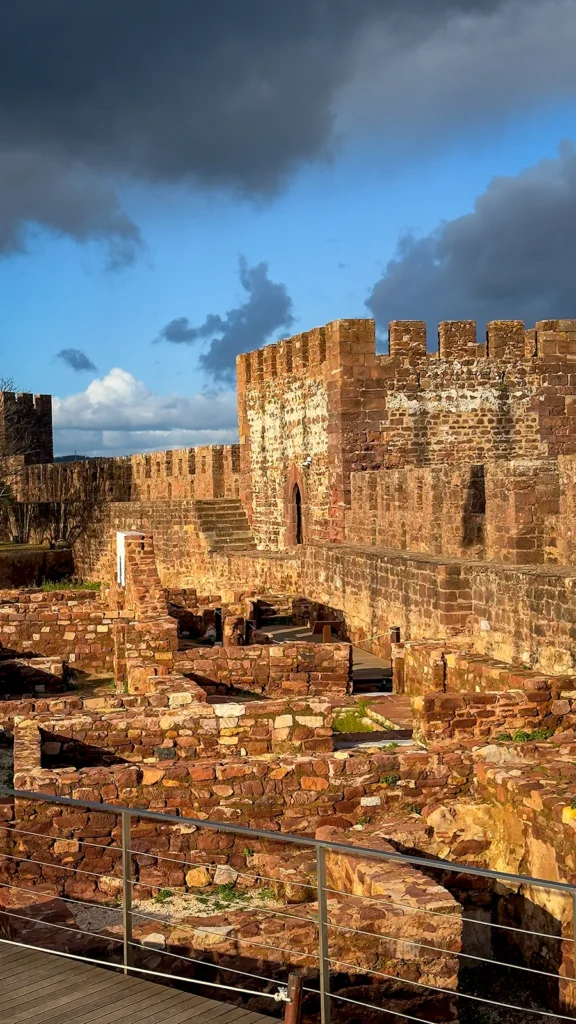
Silves offers a castle, cathedral and atmospheric hilltop setting, but its slopes and smaller service base make it better suited to a carefully paced day trip for most travellers.
Loulé feels less like a visitor destination than a town continuing with its own routines. Its market, commercial streets, weathered façades and public art make it one of the Algarve’s most rewarding inland excursions. Our guide to Loulé in winter reflects what we discovered over three visits.
Sagres feels remote, rugged and dominated by the Atlantic. It is compelling for scenery, surfing and solitude, but less practical as a general long-stay base.
Why We Keep Choosing Albufeira
We did not choose Albufeira because we believed it was the Algarve’s most beautiful town.
We chose it because its beaches, rentals, supermarkets, restaurants and central location made it practical for an extended stay. It worked well enough that we returned for a second winter and are planning a third in 2027.
A Practical Base for Exploring the Algarve
Albufeira sits close enough to the middle of the region that trips east, west and inland remain manageable.
From there, we have explored Faro, Olhão, Tavira, Lagos, Sagres, Silves and Loulé. The town also offers supermarkets, shopping centres, pharmacies, cinemas and enough winter restaurants to support ordinary life.
Those services allow Albufeira to function as a temporary home rather than simply a vacation destination.
The Neighbourhood Matters
Albufeira does not offer one uniform experience.
The Old Town feels different from Praia da Oura. The Strip has another rhythm. Newer residential areas may be quieter and more practical but farther from the beach or historic centre.
A rental that looks close to the ocean may involve a steep climb. A lively summer neighbourhood may become very quiet in winter.
For us, Praia da Oura and Correeira to the north have provided a workable balance. We can reach restaurants easily, keep the Atlantic close to our routine and use the car for shopping and wider exploration.
Practical, but Not Perfect
Albufeira becomes quieter in winter without disappearing completely. That balance suits us.
Its limitations are real. The hills can be difficult, some neighbourhoods feel heavily shaped by tourism, and the town is spread out.
We keep returning with those realities in mind, not because they disappeared.
After two seasons, Albufeira feels less like a destination we are evaluating and more like a place whose rhythms we understand.

Do You Need a Car in the Algarve in Winter?
You can spend winter in the Algarve without a car, but whether that works well depends on where you stay and how widely you want to explore.
For the way we travel, a car has been essential.
It allowed us to visit towns across the region, reach inland destinations and adjust plans according to the weather. During our second stay, we also drove from Albufeira to Seville for a weekend.
When a Car-Light Stay Can Work
A car may be unnecessary if you choose a compact base and expect to spend most of your time there.
Faro, Tavira and parts of Albufeira can support a car-light stay, especially if the apartment is close to supermarkets, restaurants, pharmacies and public transportation.
Trains and buses work well for selected journeys, but they do not always connect the places travellers most want to combine. A straightforward drive may require transfers, long waits or an earlier return by public transport.
When a Car Becomes Especially Useful
Beaches, cliff viewpoints, inland towns, rural restaurants and natural areas are often easier to reach by road.
A car also provides flexibility. You can adjust an outing around the weather, return to a town at another time of day or combine several stops without building the day around a timetable.
Parking is generally easier in winter, although historic centres may still require you to park outside the core and continue on foot.
Before renting or arranging a long-term vehicle, confirm toll handling, authorized drivers, roadside assistance and permission to drive into Spain.
For us, the car shaped the kind of Algarve experience we were able to have.
What Everyday Winter Life Feels Like
The longer you stay in the Algarve, the less the experience depends on attractions.
Beaches, castles and historic towns remain part of the trip, but they begin to share space with walks, groceries, familiar restaurants and quiet days at the apartment.
Familiar Walks Become Personal
Walking near Praia da Oura became part of my daily routine.
The route remained familiar, but the tide, light and Atlantic conditions changed constantly. After storms, even the beach itself looked different.
Repeated walks also revealed details we might have missed during a short visit: which cafés opened early, where the pavement became uneven and how the neighbourhood changed through the week.
Grocery Shopping Becomes Part of the Rhythm


Our favourite store was Continente in Albufeira because it offered the widest variety of food and household products.
Its enormous wine section also made it possible to explore Portuguese regions and grape varieties gradually.
The Intermarché near our apartment and the Pingo Doce at the foot of our street were convenient for quick purchases, but their more limited selections made them less suitable for a complete weekly shop.
That distinction may seem minor on a short holiday. Over several weeks, it matters.
Restaurants Become Relationships

During a long stay, returning can be more rewarding than constantly searching for somewhere new.
At Festa da Praia, Paula and Pedro made us feel increasingly welcome. We were not simply choosing from a menu. We were returning to a place where conversations continued from one visit to the next.
That familiarity became one of the clearest signs that Albufeira was beginning to feel less like a holiday destination and more like a temporary home.
Food and the Winter Landscape

Seafood remains central to the Algarve, particularly in working communities such as Olhão, where the market halls and fishing boats reinforce the relationship between the region and the sea.
Inland dining reveals another Algarve. At Quinta O Barradas near Silves, the setting and meal felt tied to a quieter rural landscape.
Winter oranges were among the season’s most vivid pleasures. Trees were heavy with fruit, roadside sellers offered large bags for juicing and fresh orange juice became part of breakfast rather than a special indulgence.
Long stays also make dietary needs more important. Larger supermarkets generally offer more labelled products, while returning to the same restaurants can make restrictions easier to communicate.

Walking and Accessibility in the Algarve
The Algarve encourages walking, but it is not uniformly easy to navigate.
These observations follow the same mobility-aware approach used in The Happy Traveler Accessibility Index, which considers terrain, pathways, transportation, distances, access and crowding.
Hills and Steep Beach Access
Albufeira is built across hills.
Praia da Oura beach is within walking distance of surrounding apartments and restaurants, but access involves a steep descent. There is no convenient parking at the foot of the street, and the walk back up can feel like a substantial hike.
The route was not practical for Danielle on foot.
Albufeira’s Old Town is easier to access. A two-tiered outdoor escalator connects the upper town with the lower streets, while two covered parking facilities at ground level make it possible to arrive close to the pedestrian centre.
Silves presents another kind of challenge. Its historic centre rises toward the castle and cathedral, with steep streets and uneven paving.
Historic Paving and Uneven Surfaces
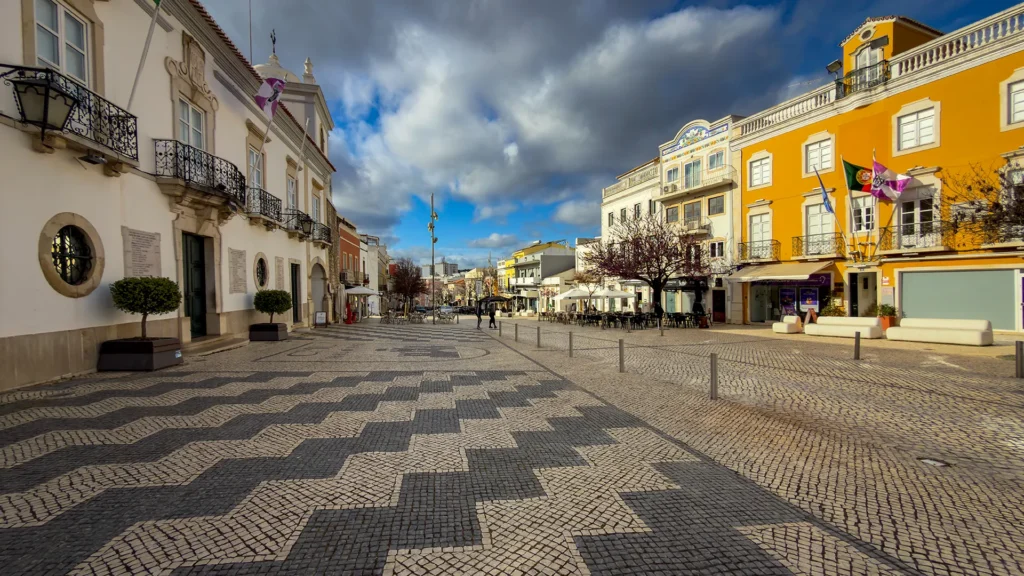
Faro, Tavira and Loulé are relatively compact, but their historic centres include calçada, curbs and uneven surfaces.
Faro’s distances are generally manageable, yet the paving can be polished and slippery when wet.
Tavira feels gentler overall, although historic surfaces still require care.
Loulé’s main attractions are close together, but weathered pavements and changes in level remain part of the experience.
Easier Waterfronts and Marina Routes

Vilamoura’s marina offers one of the Algarve’s more straightforward environments for level walking.
Olhão’s waterfront and market area are also relatively flat, although strong wind and rain can make exposed routes less comfortable.
Winter crowds generally improve these environments by reducing congestion and making nearby parking more realistic.
Cliffs, Boardwalks and Coastal Paths


Lagos and the western Algarve offer exceptional coastal walking, but cliffs, stairs, uneven ground and exposed edges require caution.
Some viewpoints are not suitable for every traveller, particularly after rain or during strong winds.
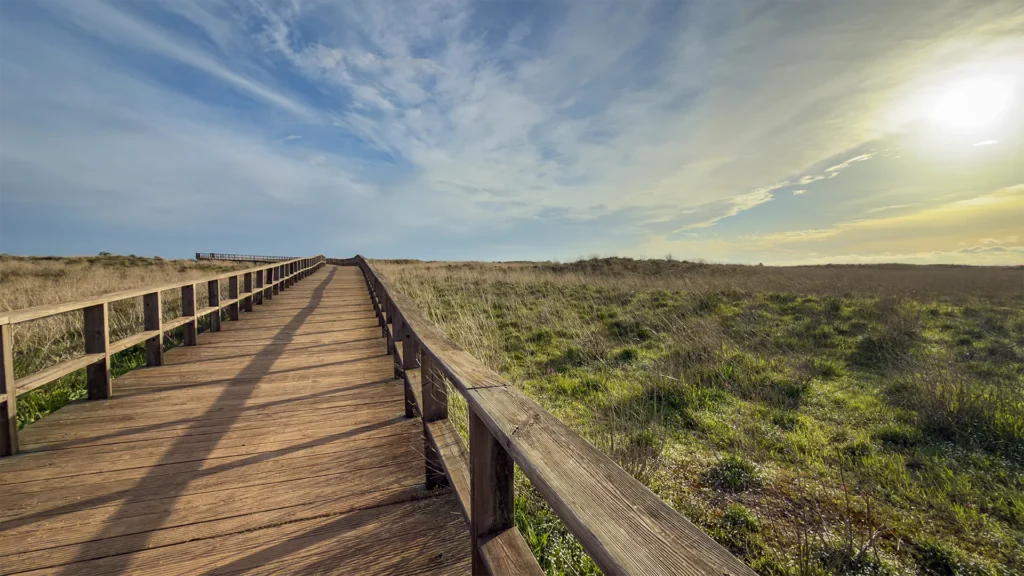
Boardwalks can provide easier alternatives, but they should not automatically be assumed to be fully accessible. Wooden surfaces may become slippery, sand may accumulate and entry points may still involve uneven transitions.
Before booking accommodation, ask:
- Are there places to sit and rest?
- What is the actual walking route?
- Are groceries and restaurants on the same level?
- Are stairs required?
- Can a car stop or park nearby?
- Is beach access realistic?
Planning a Long Stay in the Algarve in Winter

A successful winter stay depends less on finding the perfect town than on making a series of good practical choices.
First-time visitors may also find our guide, 10 Things to Know Before Traveling to Portugal, useful for understanding the country’s culture, food, transportation and everyday practicalities.
Choose the Neighbourhood and Rental Carefully
Check the actual walking route to groceries, restaurants, pharmacies and parking—not just the straight-line distance.
Google Maps can help. Use walking directions, Street View, satellite imagery and the terrain or 3D view to look for hills, stairs, missing sidewalks and indirect beach access.
These tools cannot provide a complete accessibility assessment, but they can reveal questions to ask the host.
The apartment itself matters too. Confirm:
- Heating and insulation
- Electricity costs
- Comfortable seating
- Kitchen facilities
- Laundry and drying space
- Internet speed
- Parking
- Stairs or elevator access
- Direct sunlight and ventilation
Portuguese winters are mild by Canadian standards, but tiled, poorly insulated interiors can still feel cold and damp.
Pack for Changing Weather
Bring waterproof footwear, a proper rain jacket, warm layers and shoes with good grip.
You will also need lighter clothing, sunglasses and sun protection for clearer days.
Our broader snowbird packing checklist includes clothing, medication, technology and practical comfort items for extended winter stays.
Prepare for Health and Insurance Needs
Know the location of the nearest pharmacy, clinic and hospital.
Bring enough regular medication for the full stay whenever possible, along with copies of prescriptions and a list of generic drug names.
Travel insurance should cover emergency medical care, hospitalization, medication, trip interruption, pre-existing condition clauses and side trips elsewhere in Europe.
Respect the Schengen Limit
Canadian visitors are generally limited to 90 days within any rolling 180-day period in the Schengen Area.
Portugal and Spain are both part of Schengen, so a weekend in Seville does not reset the count.
Travellers should calculate the complete rolling period when combining Portugal with other European travel.
The European Commission’s short-stay calculator can help you check previous stays and estimate how many Schengen days remain available.
Leave Room for Flexibility
Weather changes. Markets close. Restaurants take holidays. One town may deserve a second visit, while another may not hold your attention as long as expected.
An extended stay gives you room to adjust without feeling that the trip has been wasted.
Why We Are Returning in 2027

We are returning to the Algarve in 2027 because it has become more than a winter destination for us.
Familiarity Has Made It Easier to Live There
During our first stay, we were learning the roads, discovering towns and deciding whether Albufeira could work as a base.
By the second winter, we knew where to shop, which routes to take, where we liked to walk and which restaurants we wanted to revisit.
That familiarity removed practical friction without making the Algarve feel finished.
There Is Still More to Discover
Loulé revealed more of itself over three visits. Faro and Tavira gave us reasons to return. Familiar places felt different under changing weather or at another time of day.
A weekend in Seville also expanded the possibilities of using Albufeira as a long-stay base.
There are still towns we want to understand more deeply, restaurants we have not tried and familiar places we want to experience again.
A Place Where We Know How to Live
We understand the limitations more clearly now.
The Algarve is not reliably hot in winter. Some businesses close. Historic paving can be difficult, and short distances can conceal steep hills.
We are returning with those realities in mind.
What draws us back is not an idealized promise of endless sunshine. It is the quality of life the Algarve supports: morning walks near the Atlantic, familiar restaurants, winter oranges, practical services and the freedom to explore without constantly changing accommodations.
By the third season, the experience may feel less like returning to a destination and more like resuming a life that pauses when we leave.
The Algarve does not need to perform constantly or reinvent itself for us.
After two winter seasons, it has become a place where, for part of the year, we know how to live.
Frequently Asked Questions About the Algarve in Winter
The Algarve is mild by Canadian standards, but it is not reliably hot. Many days are comfortable for walking and sightseeing, while mornings, evenings and periods of Atlantic weather can feel cool.
Yes. The Algarve can be an excellent winter destination for snowbirds who value mild weather, coastal walks, everyday services and a slower pace. It is not a tropical escape, however: winter can bring rain, wind and Atlantic storms, and choosing the right town, neighbourhood and accommodation matters considerably for a longer stay.
Rainfall varies considerably. We experienced two wet beginnings, including four substantial Atlantic depressions during our first stay. During our second winter, two rainy weeks were followed by solid sunshine through the end of April.
There is no single best town. Albufeira offers convenience and regional access. Faro provides urban services and local life. Tavira feels quieter and gentler. Lagos suits travellers focused on the western coast.
Yes, particularly in a well-located apartment in Faro, Tavira or another compact town. A car becomes much more valuable when you want to explore widely, reach inland destinations or travel into southern Spain.
Accessibility varies by town, neighbourhood and route. Level marinas and waterfronts can be relatively easy, while hills, calçada, stairs and cliff paths may be demanding. Investigate the actual route between the accommodation and the places you expect to use.
Prioritize heating, insulation, seating, kitchen facilities, laundry, internet, parking and the real walking route to essential services. During a long stay, practical comfort often matters more than a dramatic view.
Canadian visitors are generally limited to 90 days within any rolling 180-day period across the Schengen Area. Time spent in Spain and other Schengen countries counts toward the same total.