
New Brunswick rewards travellers who take their time. Along the eastern coast, broad beaches meet grassy dunes, shallow water warms under the summer sun, and communities such as Shediac and Grand-Barachois preserve a strong connection to the sea. September brings another dimension: quieter shores, changing leaves, cooler evenings and enough space to notice the gulls, tides and colours of the sky.
This ten-question quiz ventures beyond the beach to explore the province’s geography, Acadian heritage, famous tides and place in Canadian history. From lobster in Shediac to the extraordinary rock formations of the Bay of Fundy, each answer reveals another layer of New Brunswick. Choose carefully, then discover whether you are planning your first coastal walk or already know the province from shore to shore.
x of x
Which Canadian province is the country’s only officially bilingual province?
✅ Correct Answer: New Brunswick
💡 Explanation: English and French are both official languages of New Brunswick and have equal status within the provincial government. The province is home to a large Acadian population, particularly in its northern and eastern regions. Visitors will commonly encounter bilingual signs, services and communities along the coast.
Learn more
x of x
What is the capital of New Brunswick?
✅ Correct Answer: Fredericton
💡 Explanation: Fredericton is New Brunswick’s capital, although Moncton is its largest city and Greater Moncton its largest metropolitan area. Fredericton lies along the Wolastoq, also known as the Saint John River. The city is known for its government institutions, universities and riverside setting.
Learn more
x of x
Which nickname is closely associated with Shediac?
✅ Correct Answer: The Lobster Capital of the World
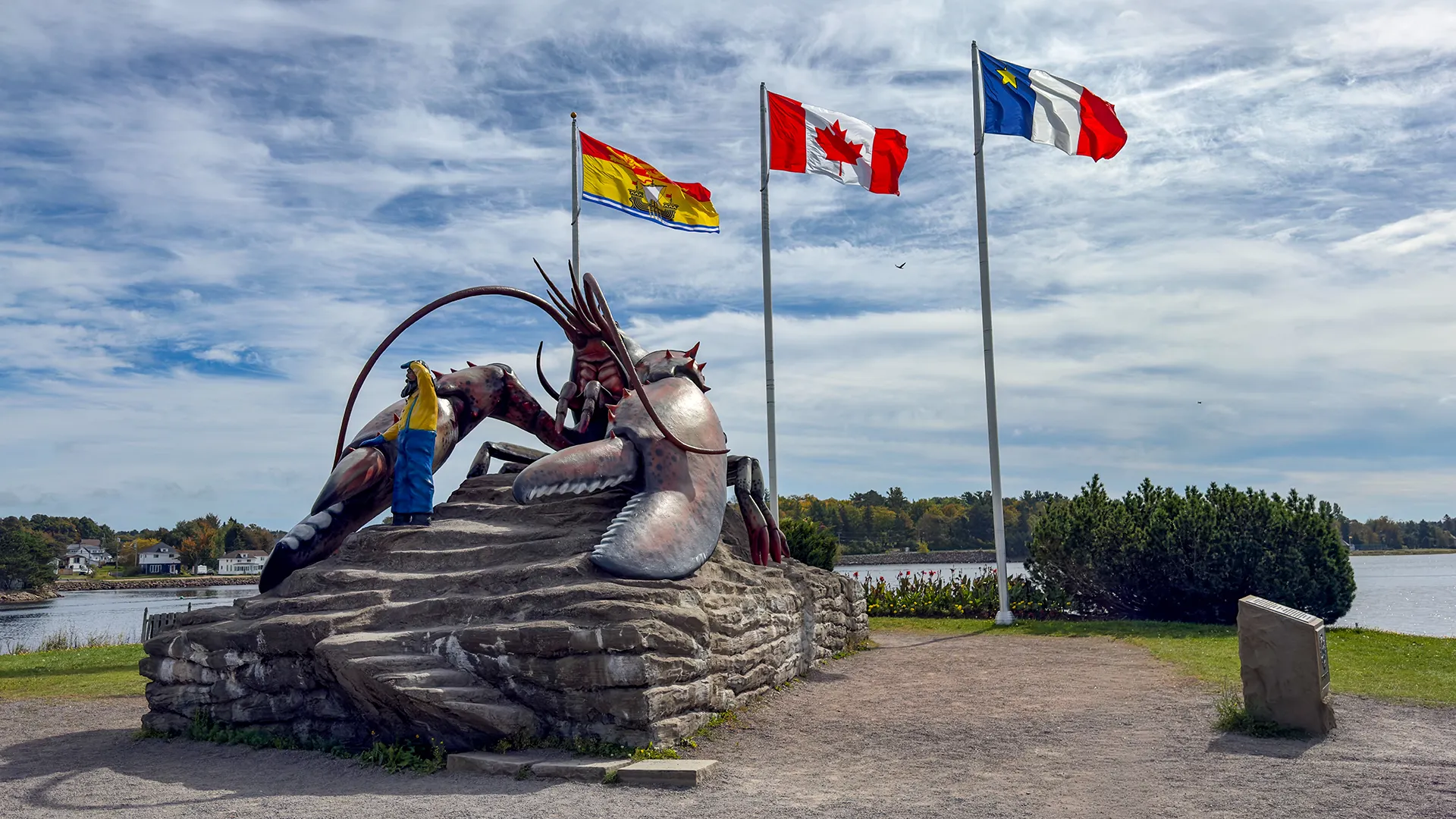
💡 Explanation: Shediac promotes itself as the Lobster Capital of the World because of the crustacean’s importance to the area’s economy, cuisine and tourism. The town’s enormous lobster sculpture has become a familiar roadside attraction and photo stop. Lobster also appears throughout the local dining scene, from traditional suppers to sandwiches and rolls.
Learn more
x of x
Parlee Beach lies along which body of water?
✅ Correct Answer: Northumberland Strait
💡 Explanation: Parlee Beach faces the Northumberland Strait, which separates parts of New Brunswick and Nova Scotia from Prince Edward Island. The strait’s relatively shallow water warms more readily than deeper Atlantic waters. This helps give the region its reputation for some of Canada’s warmest saltwater beaches.
Learn more
x of x
The Bay of Fundy is particularly famous for which natural phenomenon?
✅ Correct Answer: Some of the world’s highest tidess
💡 Explanation: The Bay of Fundy is renowned for its exceptional tidal range, with water levels changing dramatically between low and high tide. The shape and length of the bay help amplify the incoming Atlantic tide. These changes continually reshape shorelines, mudflats and coastal rock formations.
Learn more
x of x
What natural process created the distinctive shapes of the Hopewell Rocks?
✅ Correct Answer: Tidal erosion
💡 Explanation: Water, waves and repeated tidal action have eroded the sandstone cliffs into freestanding formations sometimes called flowerpot rocks. At low tide, visitors can walk on the ocean floor around them. At high tide, much of the same area disappears beneath the water, illustrating the scale of Fundy’s tides.
Learn more
x of x
Which symbol appears on the Acadian flag in addition to the French blue, white and red tricolour?
✅ Correct Answer: A yellow star
💡 Explanation: The Acadian flag uses the French tricolour with a yellow star placed in the blue section. The star represents Stella Maris, or Star of the Sea, a traditional symbol associated with the Virgin Mary. The flag reflects both the French origins and the distinct identity of the Acadian people.
Learn more
x of x
In which year did New Brunswick join Confederation as one of Canada’s original provinces?
✅ Correct Answer: 1867
💡 Explanation: New Brunswick entered Confederation on July 1, 1867, alongside Nova Scotia, Ontario and Quebec. These four provinces formed the original Dominion of Canada. New Brunswick’s position between central Canada and the Atlantic made transportation and railway connections important parts of the Confederation debates.
Learn more
x of x
The name New Brunswick honours which historic European territory?
✅ Correct Answer: Brunswick-Lüneburg
💡 Explanation: The province was named in 1784 in honour of King George III, who was also prince-elector of Brunswick-Lüneburg in what is now Germany. New Brunswick had previously formed part of Nova Scotia. Its creation followed the arrival of many Loyalists after the American Revolution.
Learn more
x of x
How do grasses help protect coastal sand dunes?
✅ Correct Answer: Their roots stabilize the dunes while the plants trap windblown sand.
💡 Explanation:Dune grasses slow the wind and capture moving grains of sand, helping dunes grow and retain their form. Their roots also bind the sand together, although powerful storms can still reshape the coastline. Healthy dunes provide habitat while helping buffer nearby land from wind, waves and storm surges.
Learn more
Your score is 3 out of 10.
🏆 New Brunswick Virtuos 🌅 Outstanding! You know the province from its quiet dunes to the powerful tides of Fundy.
🌊 Acadian Coast Connoisseur ⭐ From warm salt water to Acadian heritage, you understand what makes this coastline distinctive.
🦞 Shediac Explorer 🧭 You know your lobster and coastal landmarks. A few provincial stories are still waiting beyond the beach.
🐚 Coastal Daydreamer 🗺️ The music has started, but your discovery is only beginning. Grab a taco and follow the crowd!
New Brunswick’s story unfolds through the relationship between land, water and community. The Northumberland Strait brings shallow, relatively warm water to the eastern beaches, while the Bay of Fundy produces some of the planet’s most dramatic tides. Between them are dunes, river valleys, cities and Acadian communities that give the province a character far richer than any single attraction.
A September visit offers an especially gentle introduction. The quieter beaches leave room for long walks, changing leaves, cool evenings and lobster enjoyed without the rush of peak summer. Continue the journey with our New Brunswick in September story and discover why doing less can sometimes reveal more.