
Estimated reading time: 1 minute
September gave us a different kind of beach holiday in New Brunswick.
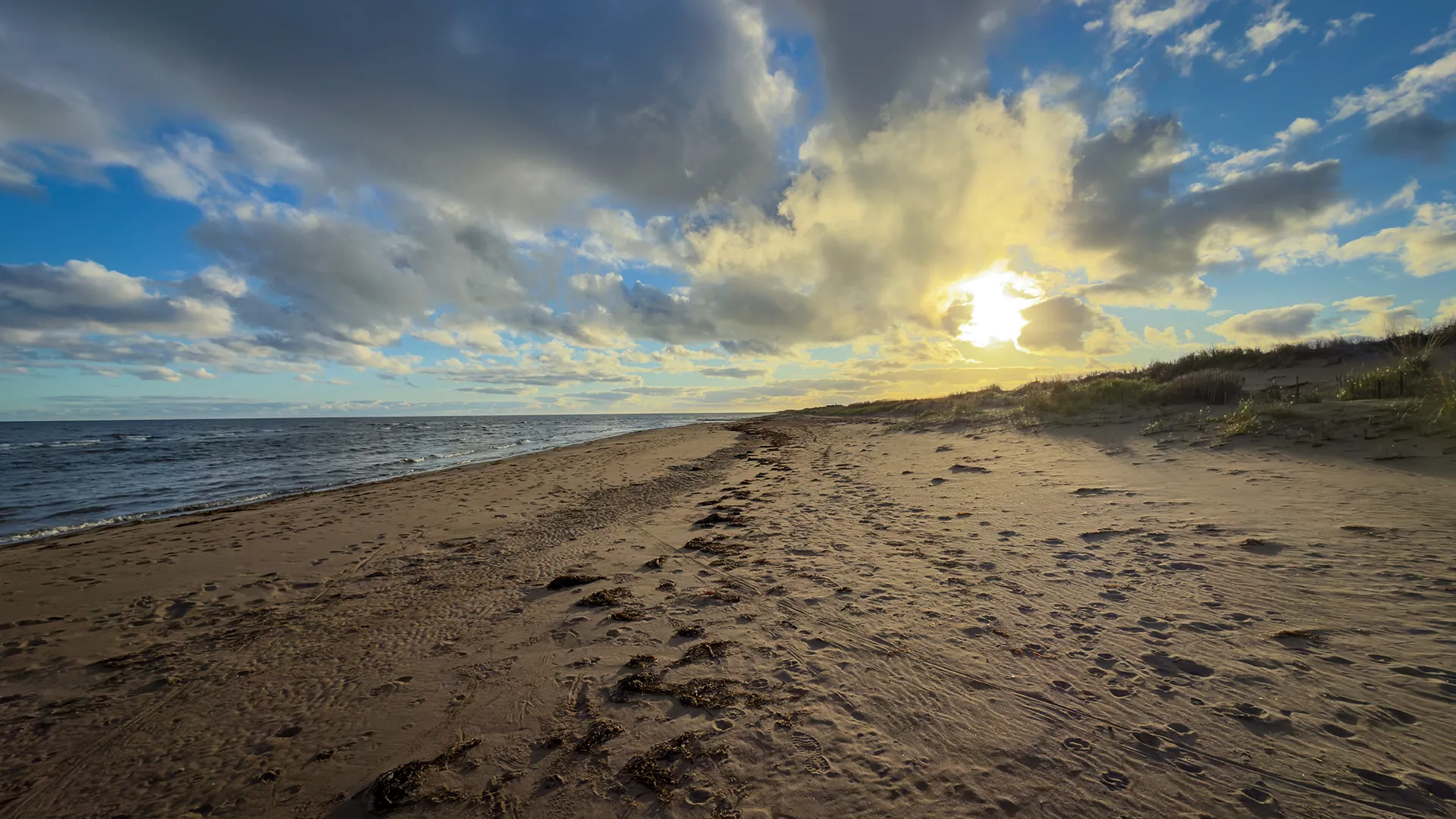
The leaves were turning red, but we were still sitting on the beach. New Brunswick in September gave us a week of sunshine, afternoons reaching 22°C, and long stretches of shore with hardly anyone around.
Our cottage in Beaubassin, near Shediac, was just steps from the sand. Mornings began with a beach walk; afternoons sometimes disappeared into a novel. There was lobster for supper and, on cool evenings, a fire to sit beside. We visited nearby beaches and explored when we felt like it, but the best part was having no pressing reason to go anywhere.
Sunrise and the open sky
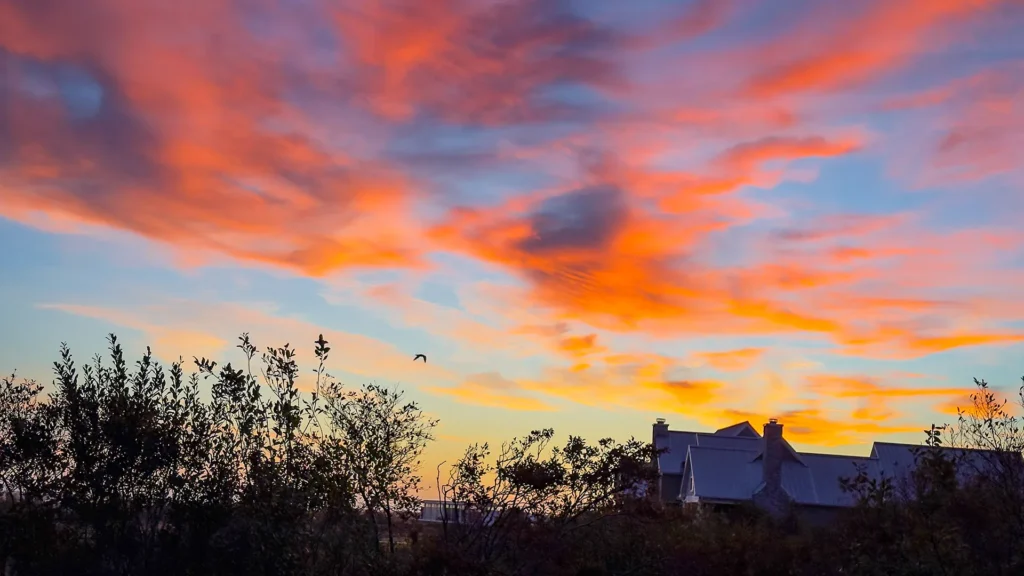
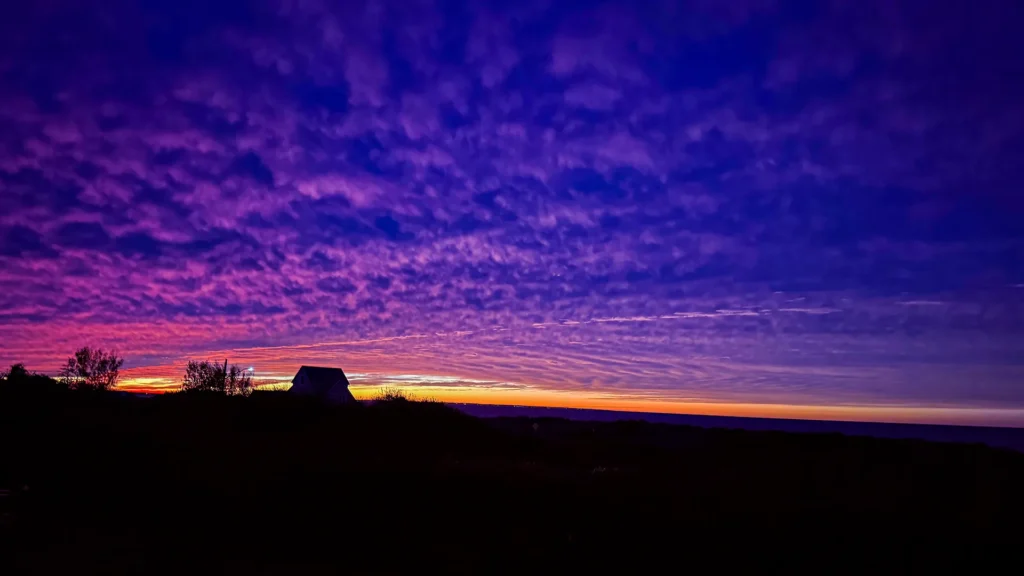
One morning, I took a photo of the sunrise. The horizon was low, there were only a few clouds, and the sky filled almost the whole view. The light had a quality I don’t find in the city. With so little competing for attention, the sky seemed to take over the landscape.
The gulls belonged to that wide-open scene. These weren’t the fast-food-parking-lot variety. They seemed prouder somehow, and more playful, riding the wind before diving for a meal. Their white wings stood out against the bright blue sky. I found myself watching them almost as much as the water.
Three beaches in New Brunswick in September: similar sand, different settings
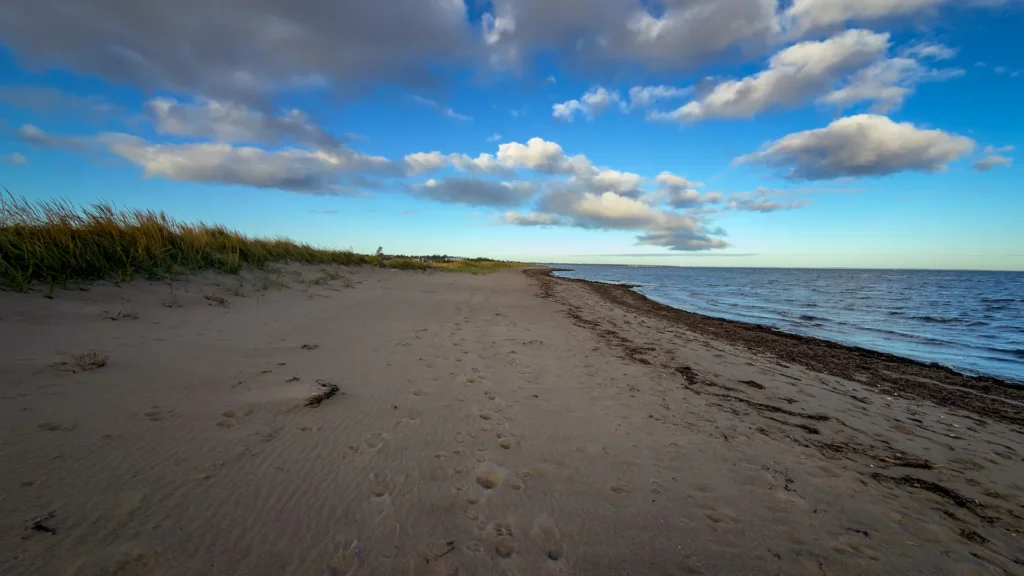
We visited Parlee Beach, Aboiteau Beach, and the stretch of beach closest to our cottage. The sand was much the same at all three: a similar depth of broad shore, bordered by dunes covered in wild grasses. What made them feel different was the setting and the facilities.
Our beach had no facilities, which suited us fine. It was close by, quiet, and easy to return to. We could walk along the shore or sit for as long as we liked. It was not wheelchair accessible—quite the opposite.
Parlee Beach as summer ends
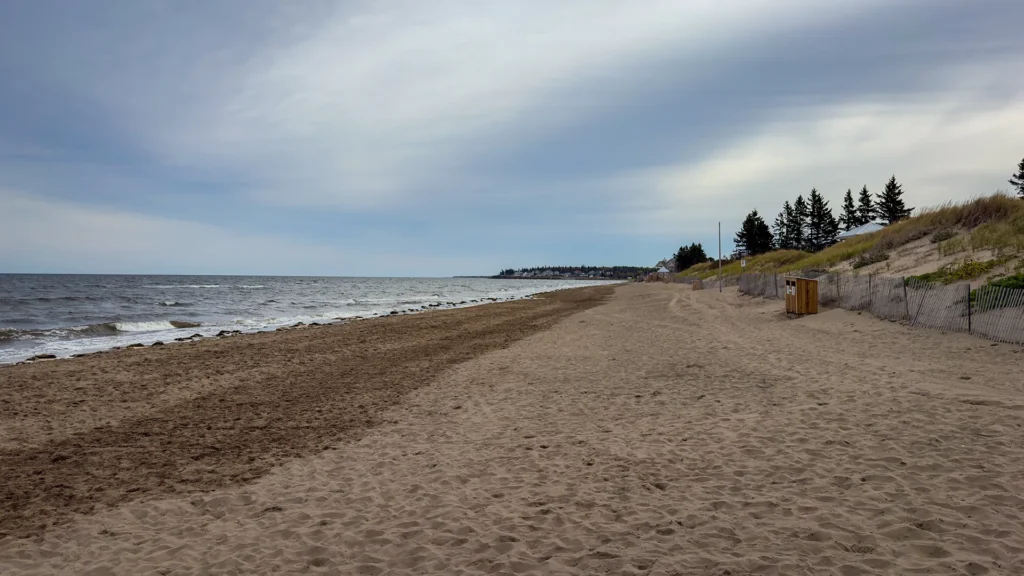
Parlee Beach, a provincial park, was well equipped, with changing rooms and washrooms, a play area for children, and lifeguard stations that had been unceremoniously put away for the winter. It had several beach access points, which I imagine help ease congestion during the summer peak. Of the three beaches, Parlee offered the best wheelchair access, with ramps and sand carpets to make reaching the beach easier.
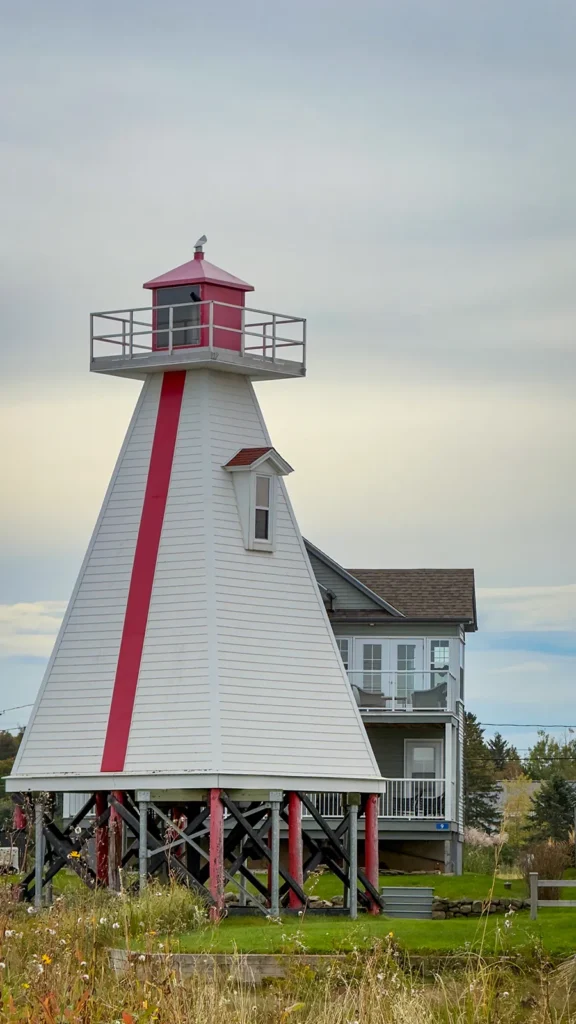
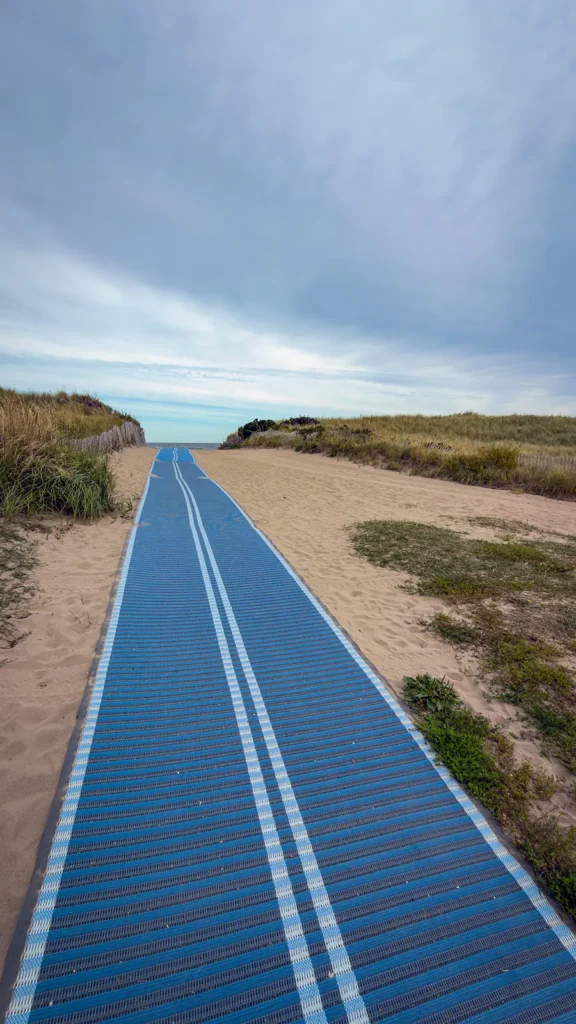
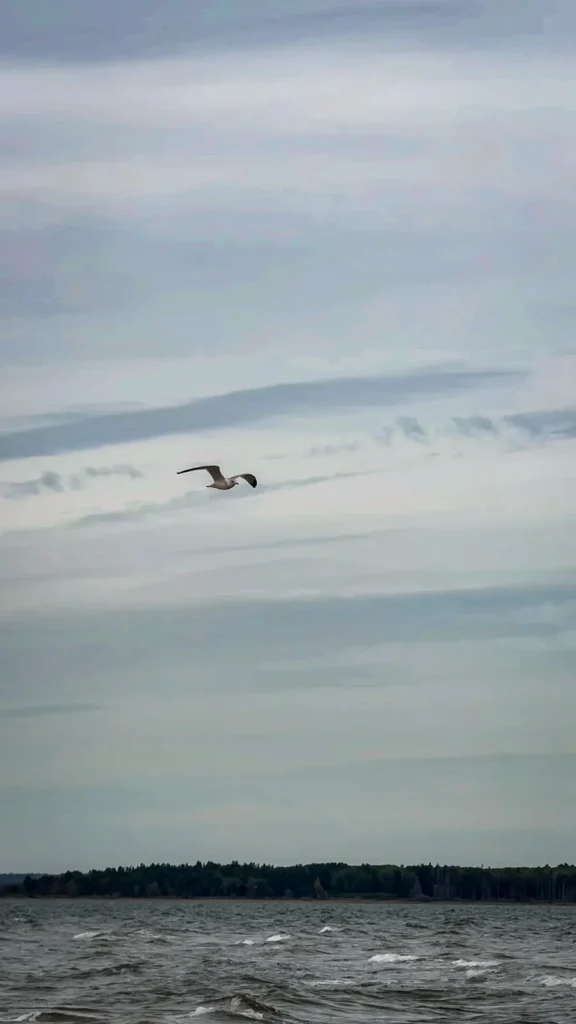
A red-and-white lighthouse stood proudly nearby. A few shops were open, but there seemed to be few people around to serve. The large parking lot was virtually empty, waiting for a few hearty local families who might come for a walk—or perhaps, shudder, a swim. Walking and hiking trails surrounded the area.
At the park entrance, I spent some time talking with the charming attendant. They shared background on Shediac, the tourism industry, and what life is like during the shoulder season. It was an easy conversation, but it gave me a glimpse of the community beyond the beach.
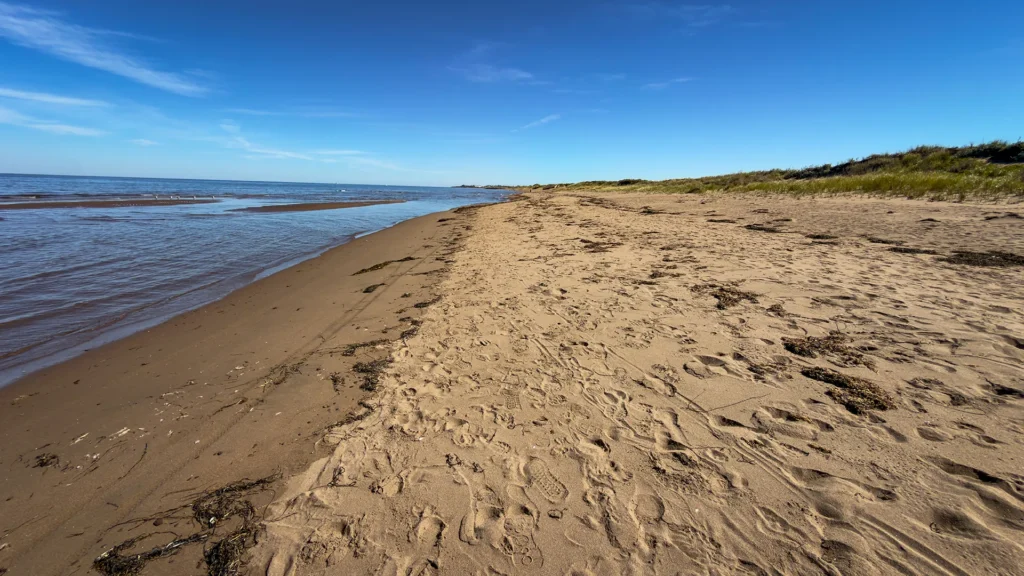
Aboiteau Beach at low tide
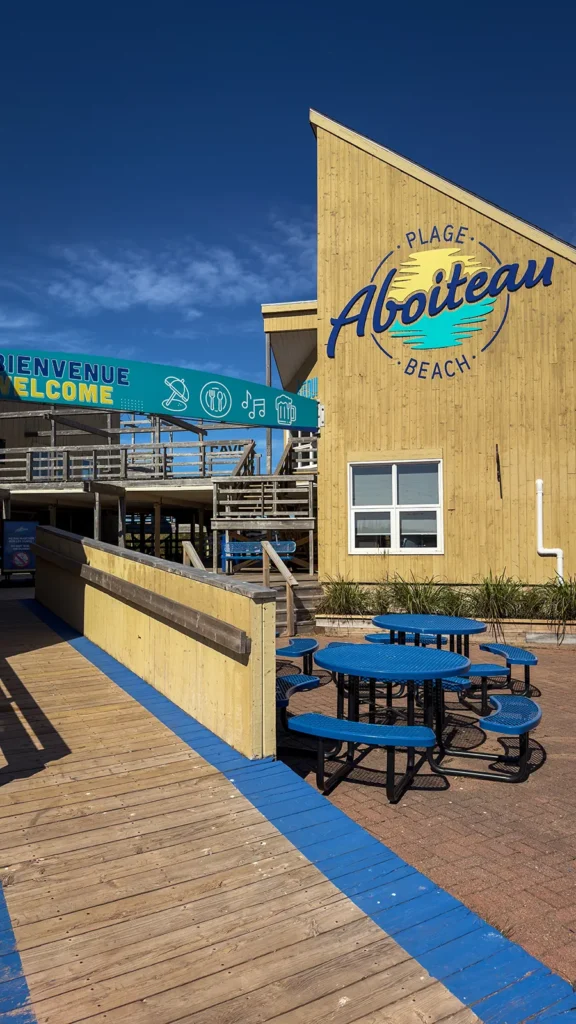
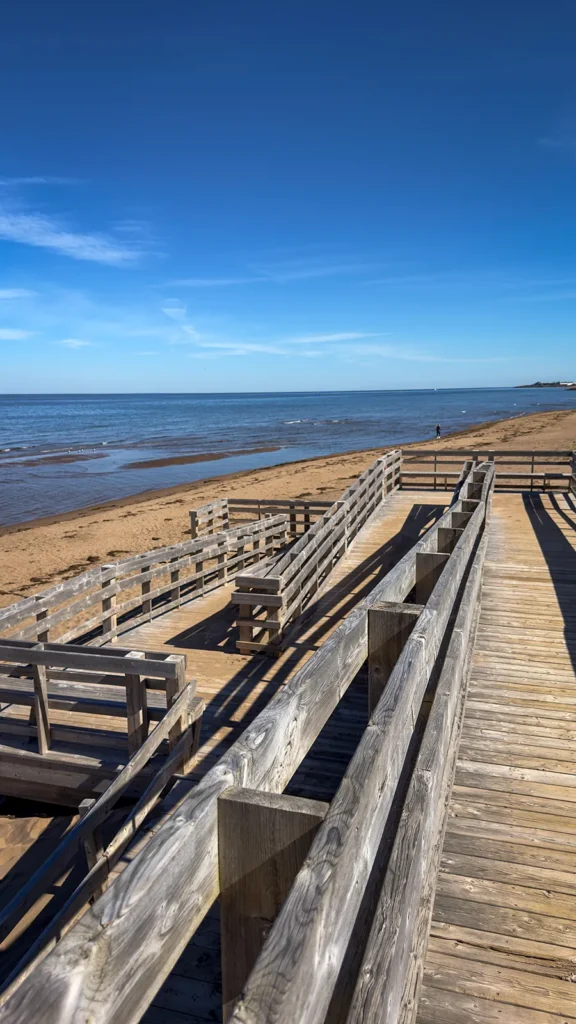
Aboiteau Beach had a more festive feel. Its large visitor centre and restaurant complex were closed when we visited, but a few couples were enjoying the sunny weather. One woman walked her Labrador along the shore. Aboiteau had ramps as well. Overhead, gulls glided and swooped, searching for morsels in the retreating tide.
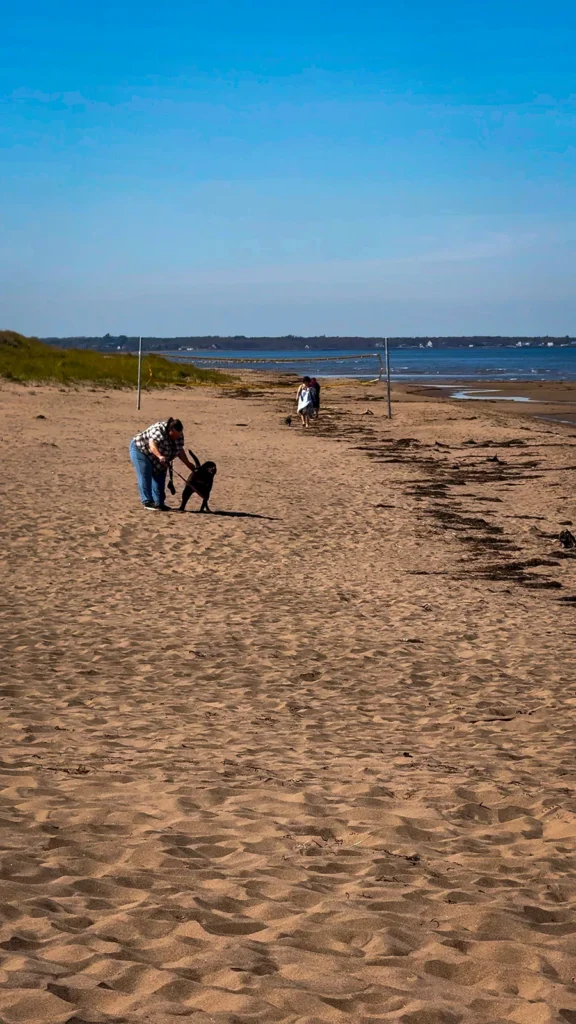
At high tide, the beach is quite narrow—perhaps a hundred feet across, or less. When the tide goes out, the sandy area expands substantially. The water was shallow at all three beaches, which helps explain the region’s reputation for warm salt water. Tourism New Brunswick attributes the warmth of these beaches to the shallow Northumberland Strait and a warm current.
The beaches were similar, yet unique. We didn’t need to decide which was best; each gave us a different place to enjoy the coast.
Beach access at Parlee, Aboiteau and our cottage
The differences in access became clearer when we looked beyond whether a beach had a ramp. The beach near our cottage was public, but the access we used was private. It was served by a small, narrow road, with no parking at the beach or along the street. Our route to the shore was not wheelchair accessible. Being close by made the beach convenient for us, but the final approach was hard: Danielle struggled mightily to cross the dune to reach it.
From what we saw, Parlee offered the easiest access of the three. It had several entry points, ramps and a blue mat that provided a firmer route across the sand. Aboiteau’s ramp made the descent from the pavilion area easier, though the open sand beyond it was still something to consider.
Reaching the beach and moving along it are different things. The tide changes the distance to the water, and facilities may vary with the season. These are observations from our September visit, not a formal accessibility rating. My Accessibility Index explains the terrain, pathways and access factors I consider when travelling.
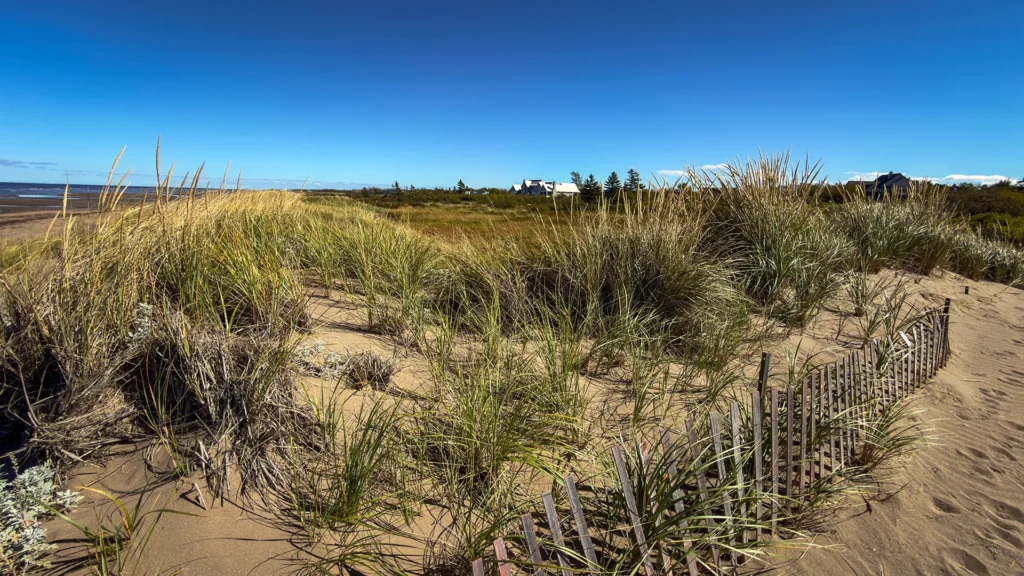
The dunes between sea and land
Behind the beaches, the dunes separated the surf from dry land. Their uneven ridges and patches of wild grass added texture to the landscape. Look longer, and a whole ecosystem came into view: different grasses, flowers and other plants, shelter for birds, and the biting insects that were rather less welcome.
Those grasses do important work. They catch windblown sand, while their roots help hold the dunes together. The dunes, in turn, help preserve the beaches and buffer nearby homes and cottages when storms drive the sea toward land. They can be reshaped by those same storms, which makes them an especially striking example of nature adapting to life at the water’s edge.
I began to see them as more than the line we crossed to reach the beach. They were a vital part of what made this stretch of coast beautiful—and what helped protect it.
The pleasure of staying put
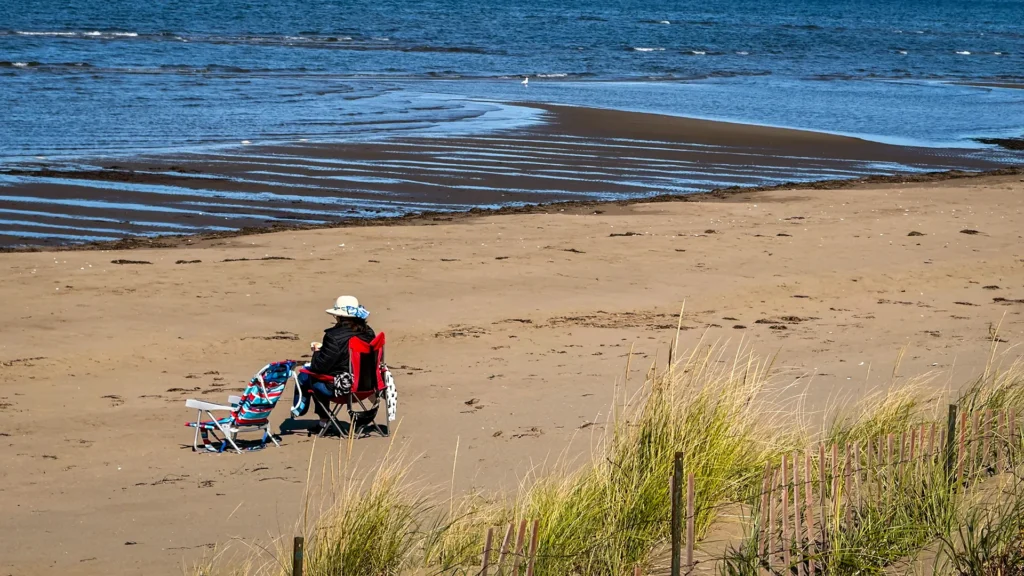
We did plenty of walking, but some of my favourite hours were spent sitting on the beach. We read, relaxed, watched the water, and breathed in the salt air.
I hadn’t read a novel for quite some time. At home, there’s usually something waiting to be done. At the beach, I could settle into a book and let the hours pass. The view was there whenever I looked up.
That became the emotional centre of the trip for me: having permission to do less. A long walk was lovely, but so was staying in one place. We didn’t need to turn each beach day into an outing with a destination. The book, the shore, and the air were enough.
A little life after summer
During our stay, Shediac was hosting a blues crawl, part of an effort to encourage visits outside the busiest summer period. The event took place in local restaurants and bars, and even on the sidewalks of downtown Shediac mainstreet. It gave us another glimpse of the shoulder season.
I thought again about my conversation with the attendant at Parlee. I’d been curious about what life and tourism were like after summer, and here was a local event giving people another reason to come. The town was still offering visitors something to enjoy, even as the beach facilities were winding down for the season.
Lobster in the Lobster Capital
Shediac is Canada’s lobster capital, so naturally we wanted lobster while we were there. Finding a restaurant meal centred on a whole lobster turned out to be trickier—and pricier—than we expected. The ate at La Coast and were promised a 2 pound lobster, but were served a three quarter pound runt. But were charged for the full 2 pounds. It was lukewarm despite the fact the restaurant was almost empty. That should have been an important clue.
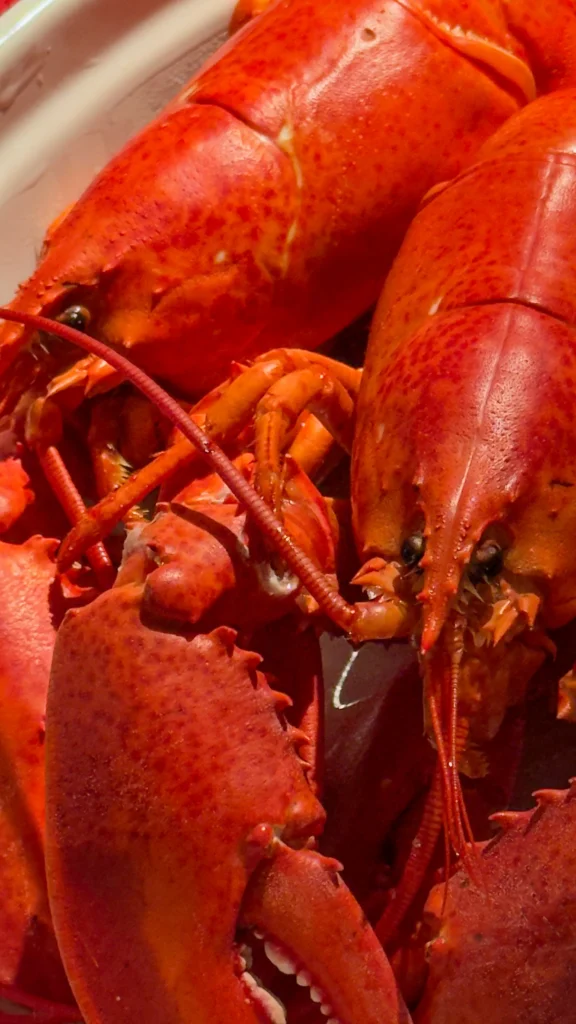
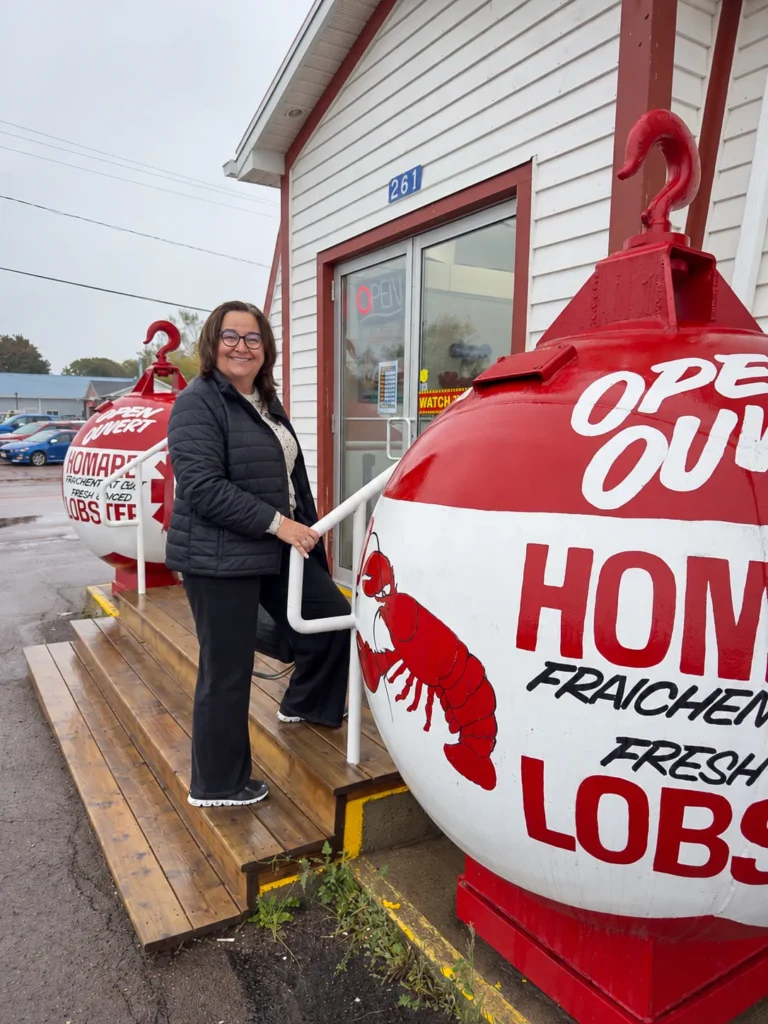

The next day, ended up buying freshly cooked lobster at the Shediac Lobster Shop and brought it back to the cottage. About 45 seconds in boiling-hot water was enough to warm it through. The flesh was slightly sweet, and the meal felt like a treat after a day by the shore, without requiring a restaurant reservation or a big evening out.
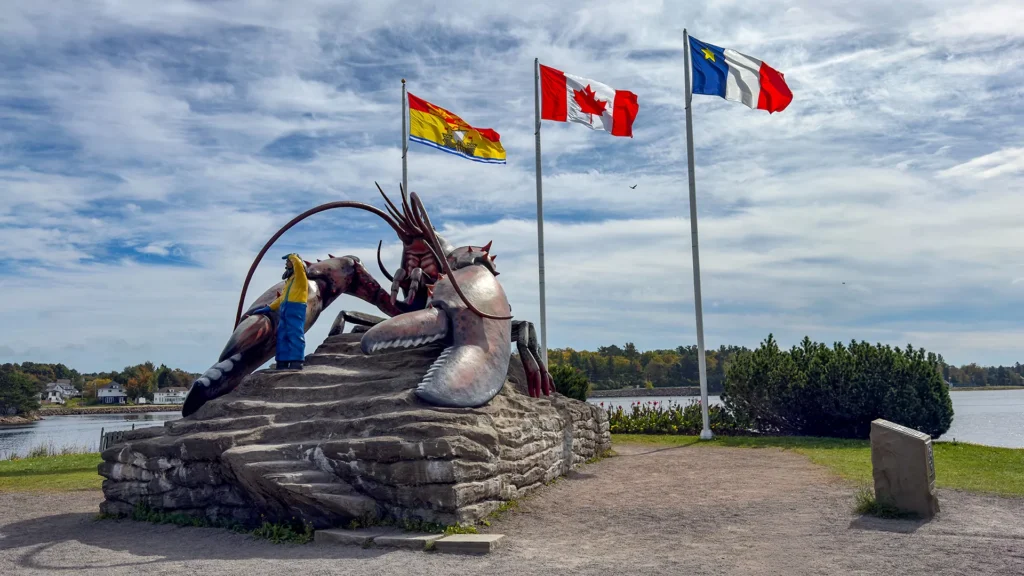
We also stopped at Shediac’s giant lobster. It’s a touristy photo opportunity, certainly, but an interesting one. The sculpture stands beside the Homarus Centre, a museum of sorts devoted to lobster. I took the photo, had a look around, and enjoyed this very Shediac stop for what it was.
Sunsets and cool evenings
The sunsets were another highlight. As the day faded, we watched the light soften over the water before heading back to the cottage. September evenings were cool, but when the weather allowed, we sat outside by the fire pit.
The sunrise, the gulls in the bright sky, and the last light over the water gave the days their own quiet rhythm. We didn’t need much more than that.
Evenings by the cottage fire
Back at the cottage, we checked that outdoor fires were permitted before lighting the fire pit. Once it was burning, the warmth let us linger outside despite the cool September air. We sat watching the flames as darkness settled, stretching the day a little longer after our walks by the water.
New Brunswick in September: a misty farewell
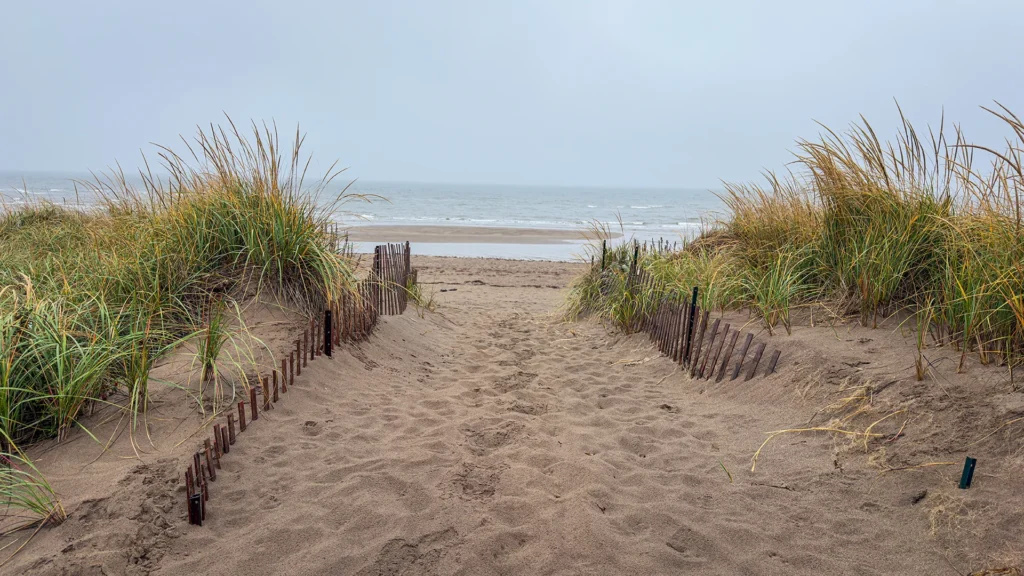
It rained the night before our departure, as if nature was gently telling us we’d had enough. By morning, the rain had subsided to a fine mist. In the soft light, the vegetation and beach took on a new, gentler personality.
On my morning walk, cottages farther along the shore faded into the haze. The horizon nearly disappeared. Water had drawn back from the beach, leaving bands of wet sand and shallow pools that caught the grey light. Scattered seaweed made dark marks across the sand.
I knew this stretch of shore by then, but the mist changed its familiar outlines. Same gulls, same dunes, but a whole different texture.
A September visit to the Shediac and Grand-Barachois area may not look like a classic summer beach holiday. For us, that was part of its appeal: three beautiful beaches, long walks when we felt like moving, time to read, a lobster supper at the cottage, and a few conversations and events that offered a glimpse of local life.
Beaches, long walks, lobster, and sunsets. Sometimes that’s plenty.